
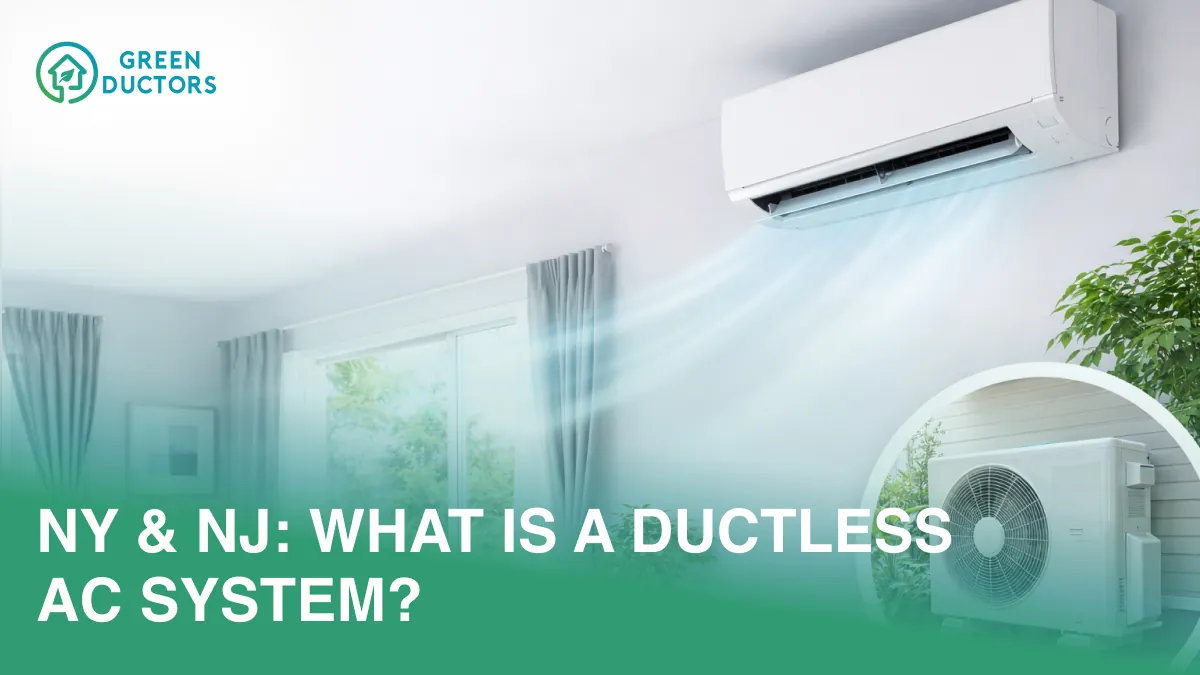
Short answer: A ductless AC (mini-split) is a heating and cooling system made of an outdoor unit and one or more wall-mounted indoor units, connected by a small line set through the wall instead of ductwork. It cools and heats room by room, uses less energy than most window units and central systems with leaky ducts, and is a popular choice for older NY and NJ homes without ducts.
To duct or not to duct — that is the question. Ductless systems, also called mini-splits, are gaining popularity across the Northeast. They offer room-by-room control, energy savings and a much simpler installation than adding ductwork, which makes them a great fit for older homes and additions.
How does a ductless air conditioner work?
A traditional central system moves air through a hidden network of ducts that can leak and waste energy. A ductless system has two main parts:
- Outdoor unit: houses the compressor and condenser. It connects to the indoor unit through a small line set carrying the refrigerant lines, power cable and condensate drain.
- Indoor unit: mounted on a wall, ceiling or near the floor. It delivers the cooled or heated air and has its own temperature control.
One outdoor unit can serve several indoor units — that’s a multi-zone system. → Single-zone vs. multi-zone mini splits
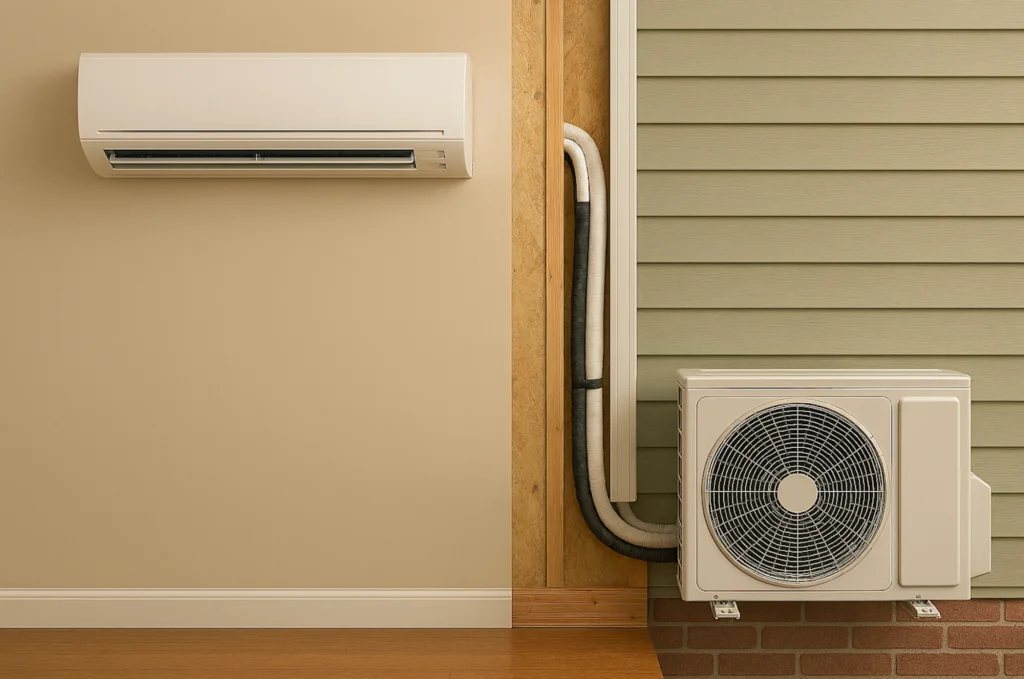
In cooling mode, refrigerant absorbs heat inside and carries it to the outdoor unit, which releases it outside. In heating mode the process reverses: the system pulls heat from outdoor air and brings it inside. Because the refrigerant goes straight to each room, there’s no energy lost in ducts.
Common myths about ductless systems
- “They need to be vented.” No — they don’t need a vent or a window opening.
- “They bring in outdoor air.” No — they heat and cool the air already in the room. If you need fresh air, that’s a job for ventilation (for example, an ERV).
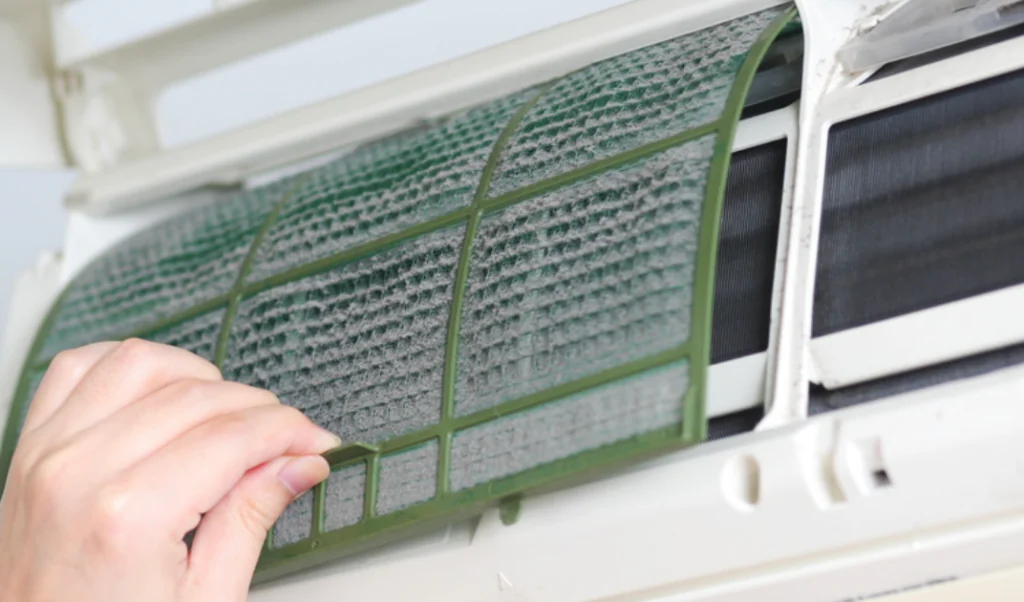
- “They’re allergen-free.” Not on their own. There’s no ductwork to collect dust, and the built-in filters catch some particles — but the indoor unit’s coil and blower wheel do collect dust and can grow mold if they aren’t cleaned.
Benefits of a ductless system
Energy efficiency and lower operating costs
No ducts means no duct leaks. Most mini splits also use inverter compressors that speed up and slow down to match demand instead of switching on and off, which saves energy.
Easy installation and zoned comfort
Installation needs only a small hole in the wall for the line set — no new ductwork and no major renovation. A single-zone system is often installed within a day. The indoor units are compact, and with a multi-zone system everyone can set their own temperature in their own room.
Quiet operation
Indoor units are very quiet. The outdoor unit makes some noise, typically about the level of a normal conversation.
Downsides to consider
- Higher upfront cost than window units
- Visible indoor units on the wall in each room
- Regular cleaning needed: filters monthly in heavy use, and a professional deep cleaning of the indoor unit about once a year
- Professional installation required — refrigerant handling and line set installation aren’t DIY jobs
Why ductless makes sense for NY and NJ homes
The Northeast has plenty of historic homes built long before central air. Adding ductwork to a brownstone or an older house can be expensive and invasive. Ductless systems give you modern comfort while preserving the building.
They’re also a great option for additions, finished basements, attics and two-family homes where each unit wants its own control. Compared with window units, they cost more upfront but are usually more efficient, quieter and don’t block your windows. You may also qualify for incentives through programs like NYSERDA or NJ Clean Energy. → Clean energy and HVAC rebates in NY and NJ
Keeping a ductless system clean and efficient
- Clean or check filters every month during heavy use
- Keep the outdoor unit clear of leaves, snow and debris
- Schedule a deep cleaning of the indoor unit’s coil, blower wheel and drain pan about once a year → ductless mini split cleaning
- Watch for error codes and blinking lights → mini split error codes
FAQ
Is a ductless AC the same as a mini split?
Yes. “Ductless,” “mini split” and “ductless mini split” all describe the same type of system.
Do ductless systems heat as well as cool?
Most do. They work as heat pumps, moving heat from outdoors into your home in winter.
How often should a ductless AC be cleaned?
Filters every month during heavy use, and a professional deep cleaning about once a year.
Whether you’re adding a room or upgrading your current setup, Green Ductors can help with maintenance and cleaning of your ductless system. Call us at 888-334-1612.
Error codes, weak airflow or a musty smell? Many mini-split problems start with a dirty indoor unit. We deep-clean ductless systems across New York and New Jersey.
