
The transition connection
The connector behind the appliance joins it to the fixed duct. Lint can settle here, especially where the connection bends or has been compressed.
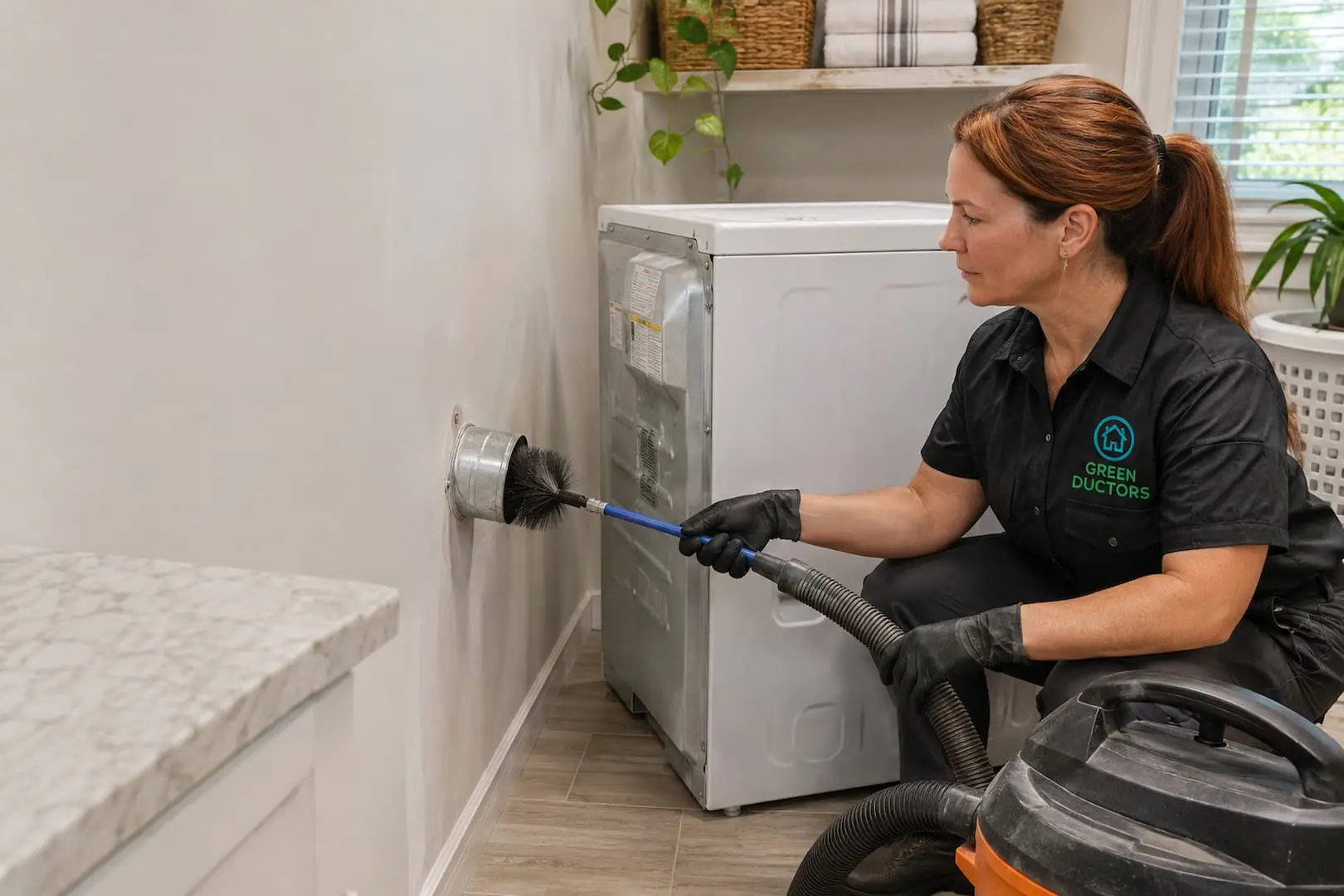
Green Ductors removes lint from dryer exhaust ducts across New York and New Jersey. The cleaning follows the route from the connection behind the dryer to the outdoor outlet, with access planned for wall exits, roof outlets and apartment laundry closets.
The lint screen catches material inside the appliance, but lint can still collect in the exhaust duct. The quote should cover the accessible route to the outdoors and identify any section that needs another access point.
The connector behind the appliance joins it to the fixed duct. Lint can settle here, especially where the connection bends or has been compressed.
Longer routes and changes of direction create more places for lint to collect. We review the layout and available entry points before choosing the cleaning setup.
The outlet lets exhaust leave the property. We check its accessible condition and include the route to it in the cleaning scope.
Lint can restrict the exhaust and trap heat. CPSC identifies lint buildup in the dryer or exhaust duct as a fire risk. These signs deserve a check, although the vent is not the only possible cause.
| What you notice | Why it matters |
|---|---|
| Normal loads need extra cycles | Lint buildup, a crushed connector or a restricted outlet can slow exhaust. Appliance faults and loading issues also need consideration. |
| Repeated airflow alerts | The screen, connector and full exhaust route need checking. Keep the exact code for the technician. |
| Unusual heat or repeated shutdowns | A dryer or load that feels much hotter than usual, or a machine that keeps stopping, needs inspection of the appliance and exhaust route. Do not assume vent cleaning alone will resolve it. |
| Lint around the outdoor outlet | The outlet and its flap may be obstructed. Its visible condition is one part of checking the full run. |
| No record of duct cleaning | An inspection gives you a starting point for maintenance, even when the dryer still appears to work. |
A persistent burning or electrical smell needs prompt attention. Stop using the dryer and arrange service; do not run more loads to see whether it clears.
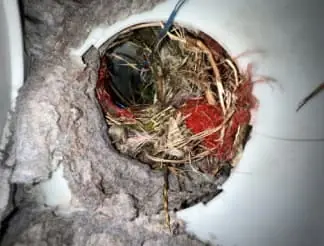
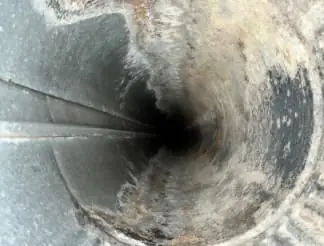
An obstructed exhaust before cleaning and the cleared duct afterward.
Some dryer ducts travel a short distance through an exterior wall. Others turn through ceilings or finish on a roof. The route affects the tools, working positions and time needed to reach the buildup.
An upper-floor outlet, roof termination or locked courtyard can require a separate access arrangement. If the exit location is unknown, the route needs to be established before the crew can confirm which sections are reachable. No one needs to climb outside or move the dryer to prepare a request.
We check the accessible connection, duct and outlet. If damaged parts or additional work are found, we explain the findings and agree on the added price before proceeding.
The crew prepares the laundry area, takes before-service photos and explains which parts of the route will be cleaned. Appliance access is arranged before tools are set up.
HEPA-filtered vacuum collection and flexible rotary brushes loosen and remove buildup. The technician chooses tools and entry points for the duct material, length and bends.
Connections opened for cleaning are secured again before the dryer is used. We inspect the serviced route and check operation, noting any remaining restriction or access limit.
The crew collects loosened lint and removes the cleaning equipment. The laundry area is tidied after the appliance and connection are back in place.
You receive a digital report with before-and-after photos of the serviced areas. Keep it as a record of the cleaning and any findings that need follow-up.
Include stacked appliances, tight laundry closets and any building approval needed. A single dryer can still have a long or difficult-to-access exhaust route.
For several machines, identify their locations and whether they have separate or shared exhaust routes. A manager or superintendent can coordinate resident entry and equipment downtime.
| Cost factor | How it changes the work |
|---|---|
| Dryer count and duct layout | Each exhaust run needs attention. Shared routes require coordination across the connected machines. |
| Length and bends | A short wall exit and a long concealed run require different reach and cleaning setups. |
| Appliance and outlet access | Stacked units, tight cabinets and roof outlets can add setup or access work. |
| Condition and added work | Cleaning a usable duct is separate from replacing a damaged connector or altering the route. Confirm any additional price before that work begins. |
Finish laundry before the appointment and empty the drum. The dryer stays out of use while its exhaust is disconnected and cleaned.
Move baskets and loose items away from the appliance. Leave a stacked or built-in dryer in place; the crew needs to plan how to reach its connection.
Make the laundry room and any required courtyard or roof access available. In a shared laundry, let users know which machines will be unavailable.
Clean the lint screen after each load and follow the dryer manual for vent maintenance. High-use laundry, long runs and several bends deserve closer attention than a short, lightly used route. A change in normal drying time or repeated airflow alert is a reason to check sooner.
Keep the report from the visit and use the findings to set the next check. Cleaning removes lint; a crushed connector, damaged duct or appliance fault needs separate attention. A clear exhaust route cannot guarantee a particular drying time.
Green Ductors serves properties in New York and New Jersey. Include the ZIP code in your request to confirm the visit and local access arrangements.
Read customer feedback“Cleaned dryer vent & chimney inspection of both . On time , efficient, professional Recommend Green Ductors . I’m returning customer.”
No. This service focuses on the exhaust connection and duct to the outdoors. Cleaning inside the dryer cabinet is appliance service and should be specified separately. Ventless dryers do not have this outdoor exhaust route.
Dryer count, duct length, outlet height and appliance access affect the price. The quote should identify the route covered and any access limitations. Replacement parts or changes to the vent are separate items to approve before work starts.
No. Clear the surrounding floor where practical and tell us about stacked units or built-in cabinetry. Let the team plan appliance access rather than moving it just to prepare.
Tell us about the roof outlet when requesting service. We review the route, roof access and property arrangements before confirming the work.
Replacement is separate from cleaning a usable connector. If the inspection finds a damaged or unsuitable connection, we explain the recommended work and its price.
Yes. We provide a digital before-and-after photo report documenting the service, along with an explanation of any visible concerns or access limits.
Follow the interval in your dryer manual and adjust it for use and inspection findings. As one example, Whirlpool guidance specifies every one to two years, or sooner if drying performance declines. Shared laundries and heavily used dryers may need more frequent checks.
We can discuss your dryer setup and prepare a quote for the route and access involved.
Prefer to call?
(888) 334-1612