
Inspect and protect
We inspect the wheel, motor and housing, explain what we find and confirm the work. The equipment is isolated for service, and nearby floors and surfaces are covered.
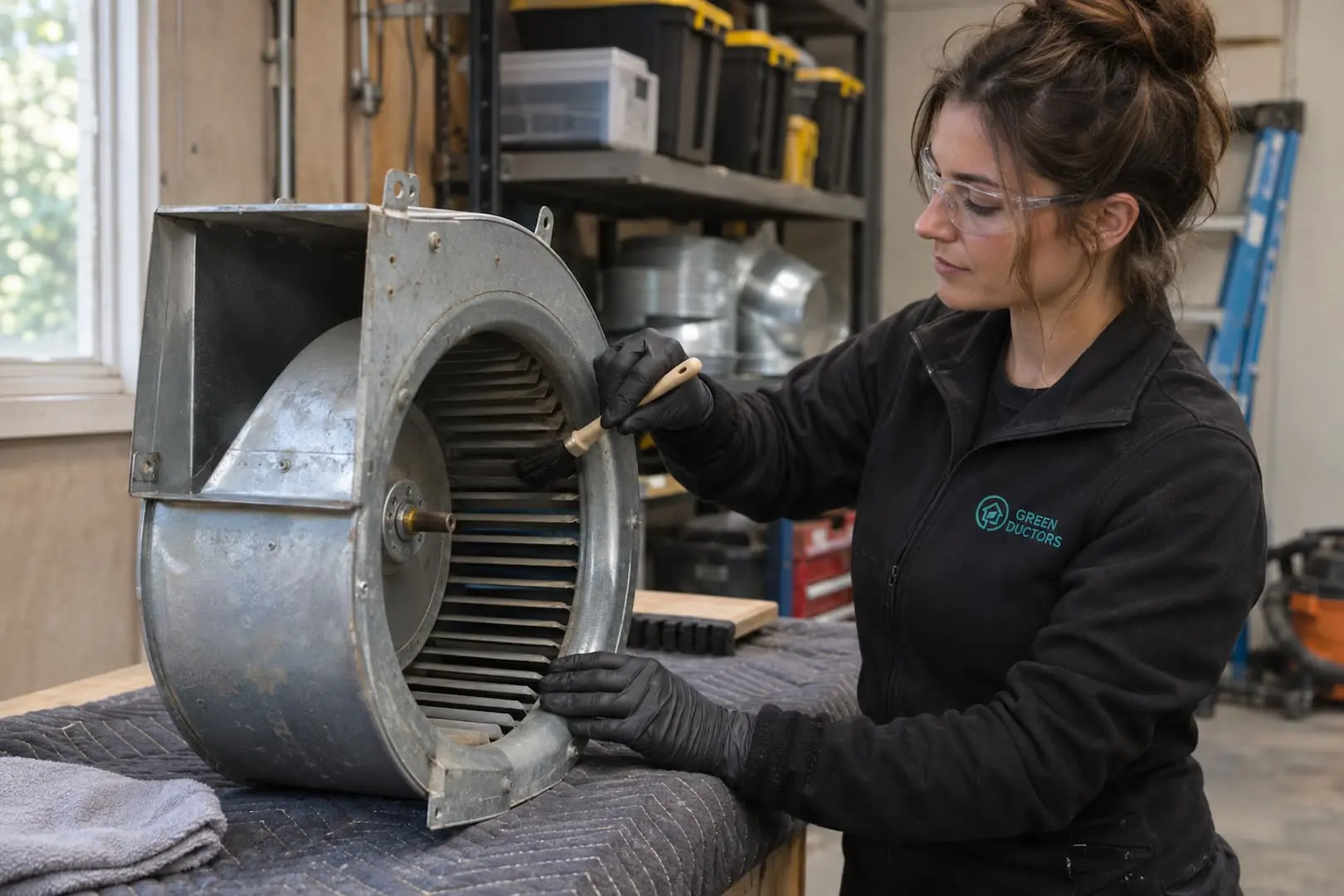
A layer of dust between the blower blades is easy to miss from outside the cabinet. Green Ductors cleans furnace and AC blower assemblies in New York and New Jersey, reaching the wheel and housing while protecting the motor and electrical components.
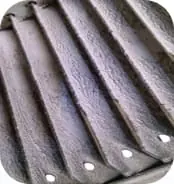
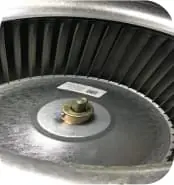
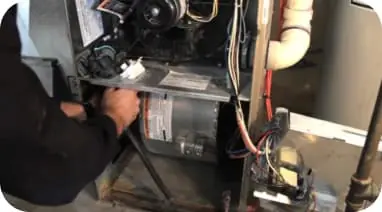
A closer look at the wheel and the blower compartment.
The motor turns a shaft connected to the blower wheel. Its curved blades draw air through the furnace or air handler and move it through the duct system; the housing guides that airflow. The wheel, motor and housing are separate parts of the same assembly.
Dust can coat the blades and collect inside the housing. Cleaning removes those deposits from the surfaces that move the air. If buildup is restricting the blower, removing it can improve airflow through the equipment; the result also depends on the filter, coil and ducts.
People often call this blower motor cleaning. The electrical motor needs a different cleaning method from the wheel and housing. We inspect the assembly before choosing which parts to remove. A stopped fan, overheating or scraping sound also needs a fault check.
Our process follows the unit’s construction and the condition of the assembly.
We inspect the wheel, motor and housing, explain what we find and confirm the work. The equipment is isolated for service, and nearby floors and surfaces are covered.
The technician removes the parts needed to reach the wheel. Depending on the cabinet and wire length, the assembly is cleaned with suitable access in place or removed for the work.
HEPA-filtered vacuum collection and soft hand brushes remove dust from the blades and housing. The technician protects electrical parts and takes care around the wheel blades and balance weights.
The technician reassembles the serviced parts and checks operation. The photo report records the cleaned areas and visible concerns. We explain any remaining noise or airflow issue and the filter care needed between visits.
Visible buildup found during service is a useful reason to inspect the assembly. A photo should show the wheel blades and affected area, rather than dust on the cabinet alone.
A loaded filter, dirty coil or duct restriction can also reduce airflow. The inspection should identify which part is restricting the air before cleaning is chosen.
Check whether the recommendation refers to the wheel, motor or another component. Existing service notes can establish what was found without opening the cabinet yourself.
| Component | Cleaning scope |
|---|---|
| Blower wheel and housing | Removal of accumulated dust and debris, with access chosen for the equipment. |
| Motor and wiring | Sensitive components protected; disconnection and reassembly handled when required for access. |
| Filter and evaporator coil | Condition reviewed, with any additional cleaning listed separately in the quote. |
| Supply and return ducts | A separate duct-cleaning service when the wider duct network also needs attention. |
| Burners, heat exchanger and repairs | Blower cleaning is one component service. It does not include a complete furnace tune-up, motor replacement or repair unless separately agreed. |
Move boxes and small items away from the furnace or air handler. Leave panels in place; the technician will isolate the equipment and open it for service.
Provide access to utility rooms and ceiling hatches. A cabinet above a finished ceiling may need more room to withdraw the assembly than to inspect it.
The blower cannot run during cleaning, so the system it serves will be unavailable. Cabinet design, removal and reassembly affect the work window; confirm it when scheduling.
Unit count, cabinet access, buildup and removal determine the price. An accessible assembly in a utility room is a different job from one above a finished ceiling. Some wheels can be reached in place; others need to come out for a thorough clean.
Compare the same scope: wheel and housing cleaning, any removal and reassembly, and the operation check. Coil work, replacement parts and other equipment service should appear separately so a broader quote is not mistaken for the same job.
A filter that is missing, damaged or poorly seated can allow dirt to bypass it. Follow the equipment instructions for filter care.
Follow the manufacturer’s schedule for checking the blower. Inspection and deep cleaning are different: the condition of the blades determines whether cleaning is needed.
Save the photos and service notes. If deposits return quickly, the filter fit and the source of the dirt need checking rather than simply repeating the same cleaning.
Read customer feedback“GREAT service and super detailed recap. thank you”
It depends on the agreed scope. Ask for the blower assembly, coil and filter to be listed separately so you know which components are included.
Some units offer adequate access in place; others require removal. The technician needs to see the cabinet and the condition of the wheel before choosing an approach.
It can help when deposits are contributing to the problem, but a loose wheel, worn bearing or electrical fault needs a separate diagnosis. The operation check after cleaning helps identify a concern that remains; quiet operation is not a guaranteed outcome.
Use inspections and the manufacturer’s maintenance guidance to judge the need. Filter fit, operating time and dust exposure all affect how quickly buildup develops.
Routine filter care may be a homeowner task, but opening the blower assembly involves electrical equipment and careful reassembly. Have a technician assess work that requires cabinet access or disconnection.
A wall-mounted mini-split has a different fan and access method. Ask about our ductless mini-split cleaning service and give us the unit model.
Equipment design affects how we reach the fan. We can review your setup and explain the cleaning work involved.
Prefer to call?
(888) 334-1612