
Filter and cover
The filter catches dust as room air enters the head. We clean the serviceable filter and cover and check their fit before putting them back.
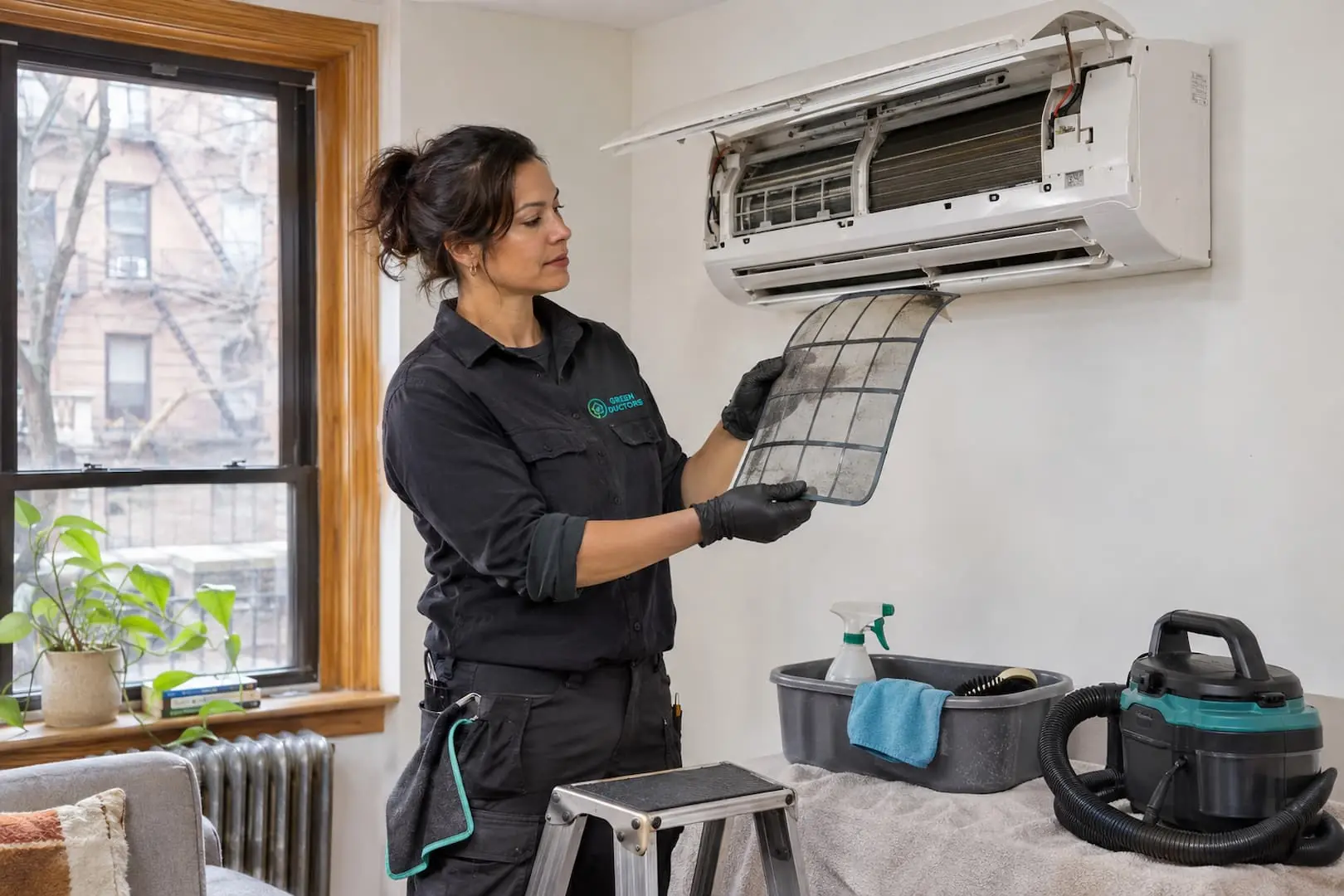
Dust builds up on the coil and blower wheel inside a mini-split, even when the filter looks clean. Green Ductors deep cleans ductless indoor units across New York and New Jersey, with protection for the wall, floor and furnishings around each head.
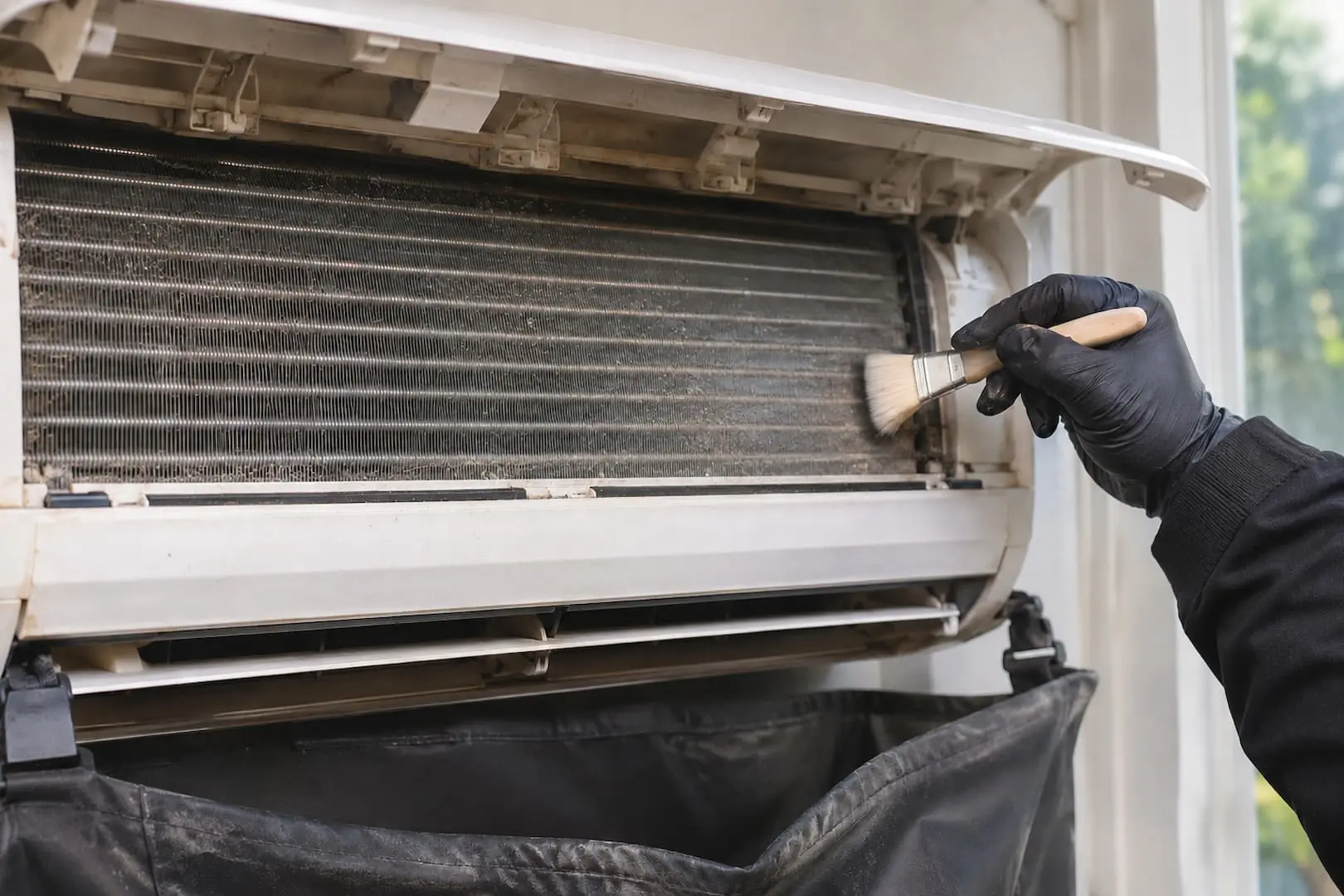
Inside each head, the blower wheel draws room air across the coil and sends it back into the room. The coil exchanges heat between that air and the refrigerant. Dust on the coil or fan can remain even after the removable filter has been washed.
Our indoor-head cleaning covers the serviceable filter and cover, accessible coil and blower wheel, with the condensate area checked for buildup or drainage concerns. The model determines how far the head can be opened; any limit on access should be clear in the quote.
Refrigerant lines connect the head to the outdoor unit, which exchanges heat with the outdoor air. Room air stays indoors; it does not travel through those lines. Cleaning a ductless head therefore focuses on its own coil, fan and filter.
Each component has a different job. We check the model and condition before choosing how to reach the surfaces that need cleaning.
The filter catches dust as room air enters the head. We clean the serviceable filter and cover and check their fit before putting them back.
Air passes between the coil fins as heat moves to or from the refrigerant. Removing dirt from those surfaces helps clear the air path; the fins need gentle handling.
The curved fan blades move air through the head and into the room. Cleaning removes deposits along those blades, including buildup that a filter wash leaves untouched.
We check the accessible pan below the coil. Clearing a blocked drain line, servicing a condensate pump or cleaning the outdoor unit should be listed separately when needed.
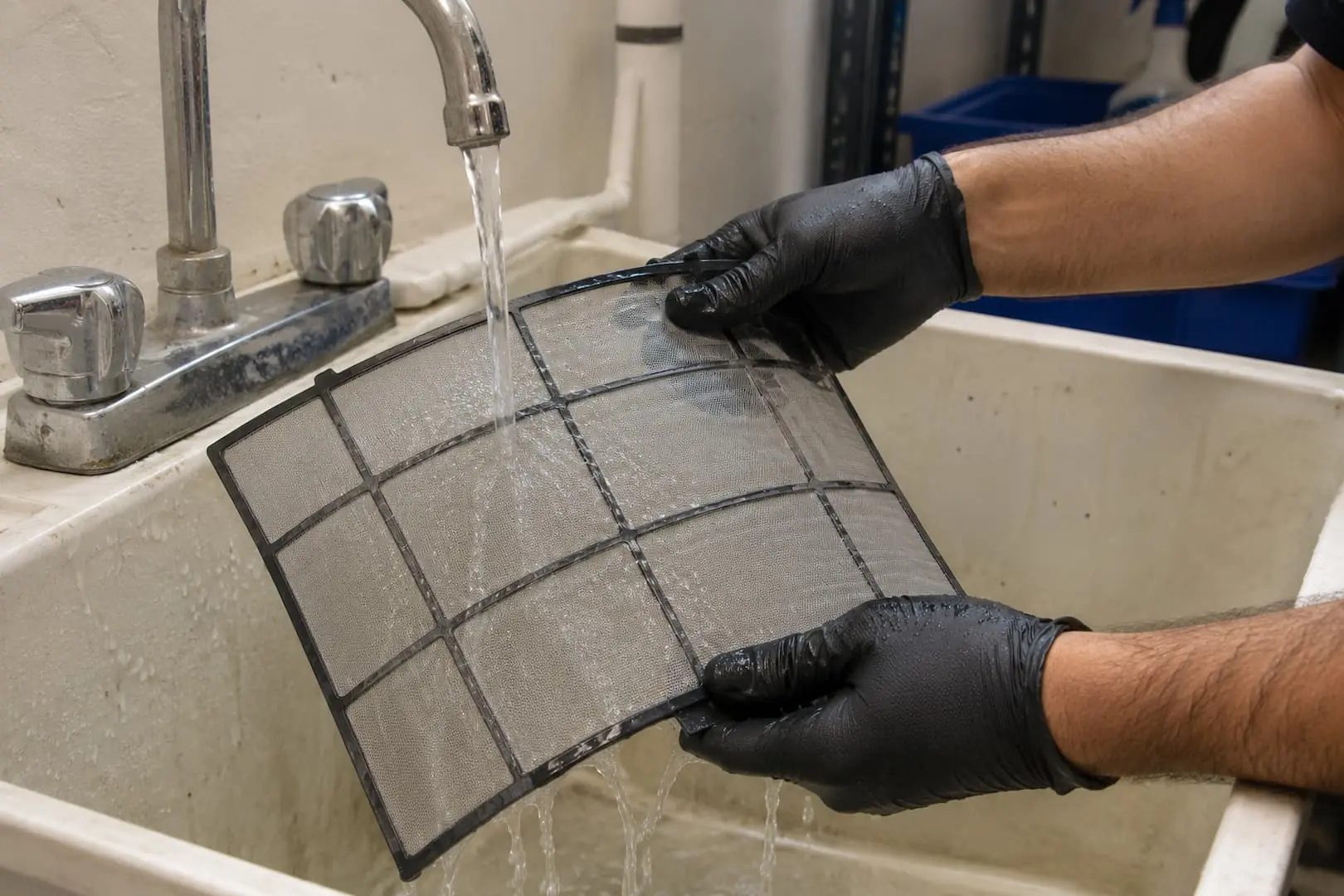
Follow the manufacturer’s instructions for routine filter care. A washable filter must be clean, dry and properly seated when it goes back. Replace a damaged filter rather than leaving a gap around it.
Filter care and internal cleaning do different jobs. A washed filter does not remove deposits already on the coil or fan. Reaching those parts may require covers to be removed and the room protected before the technician starts cleaning.
Buildup on the coil or fan calls for a closer look inside the head. Other symptoms need their cause checked before cleaning is treated as the answer.
| What you notice | What needs checking |
|---|---|
| Dust on the fan or outlet | The blower wheel and coil behind the cover, even if the washable filter is already clean. |
| An odor when the unit starts | Buildup in the head and the accessible condensate area. The source of a persistent smell still needs to be found. |
| Less air from the unit | Filter condition and internal buildup, followed by other causes if the airflow remains weak. |
| Water below the head | The drain pan and condensate route. Cleaning surfaces alone may not clear a blocked line or resolve a pump problem. |
A head that will not start, shows an error code or makes a new mechanical noise needs diagnosis. Cleaning can remove dirt from a working component; it does not correct an electrical or refrigerant fault.
We isolate the equipment, protect the nearby wall and floor, then remove the serviceable covers and filters needed to reach the coil and blower wheel.
A HEPA-filtered vacuum collects loose dirt, while soft hand brushes work along accessible surfaces. The technician protects electrical components and takes care around the coil fins.
Where the unit permits rinse cleaning, we use a Mini-Split Bib Kit with the CoilJet Coil Cleaner System. The bib collects runoff while the technician cleans the included coil and fan surfaces.
The cleaned parts and front panel go back in place, and the technician checks operation. We review the work and explain any drainage, odor or performance concern that remains.

A bedroom head used each night and a rarely used guest-room unit can have quite different buildup. Count every indoor head you want cleaned and note which rooms they serve. Each one needs its own access and cleaning.
Each head needs room below it for the technician and cleaning setup. Ceiling cassettes, high wall mounts and units above built-in furniture can require different access from a standard wall head. Arrange entry to every included room when booking a multi-unit visit.
Move small belongings and electronics from below each head, and keep a clear route through the room. Heavy furniture or fixed cabinets should be discussed before the visit so the working space is ready. Leave the covers and internal parts in place for the technician.
The equipment being serviced must be off while it is opened and cleaned. With several heads on one outdoor unit, the shutdown may affect more than one room. Confirm the sequence and work window before scheduling, especially if those units provide your only heating or cooling.
Indoor-head count is only the starting point. Compare quotes for the same parts, unit types and access conditions.
Each indoor head has its own coil, fan and filter to clean. A wall head and a ceiling cassette can take different amounts of disassembly.
High mounts, fixed furniture and narrow spaces affect how the protective cleaning setup fits around the unit.
Heavy deposits or difficult access to the wheel can add work. Outdoor-coil cleaning, a drain-line blockage or pump service changes the scope and should be priced separately.
Read customer feedback“I hired Green Ductors for a mini split deep clean and was very impressed with how great a job they did and how courteous they were.”
Follow your model’s filter-care schedule and include the internal coil and fan in regular professional inspections. Deep cleaning is needed when those parts have buildup; operating hours, room dust and filter care affect how quickly it collects. An annual maintenance check does not automatically mean every head needs a deep clean.
No. A wall-mounted ductless head recirculates air in the room and has no central supply-and-return duct network. The cleaning focuses on the indoor unit's accessible components.
Yes. Each indoor head needs its own cleaning and room access. The quote should identify all included heads, and the work plan should account for any heads that share an outdoor unit.
Cleaning can remove buildup inside the unit that contributes to an odor. We also review the accessible condensate area; a persistent smell needs its source identified, including any drainage issue.
Make the floor below the indoor unit accessible where practical. Tell us about heavy furniture or built-in cabinets beforehand rather than trying to move difficult items yourself.
Indoor-head cleaning covers the listed indoor components. An outdoor condenser has separate surfaces and access needs, so outdoor cleaning must be included as its own item in the quote.
One indoor head or several: we can review the units you want cleaned and explain the work included.
Prefer to call?
(888) 334-1612