
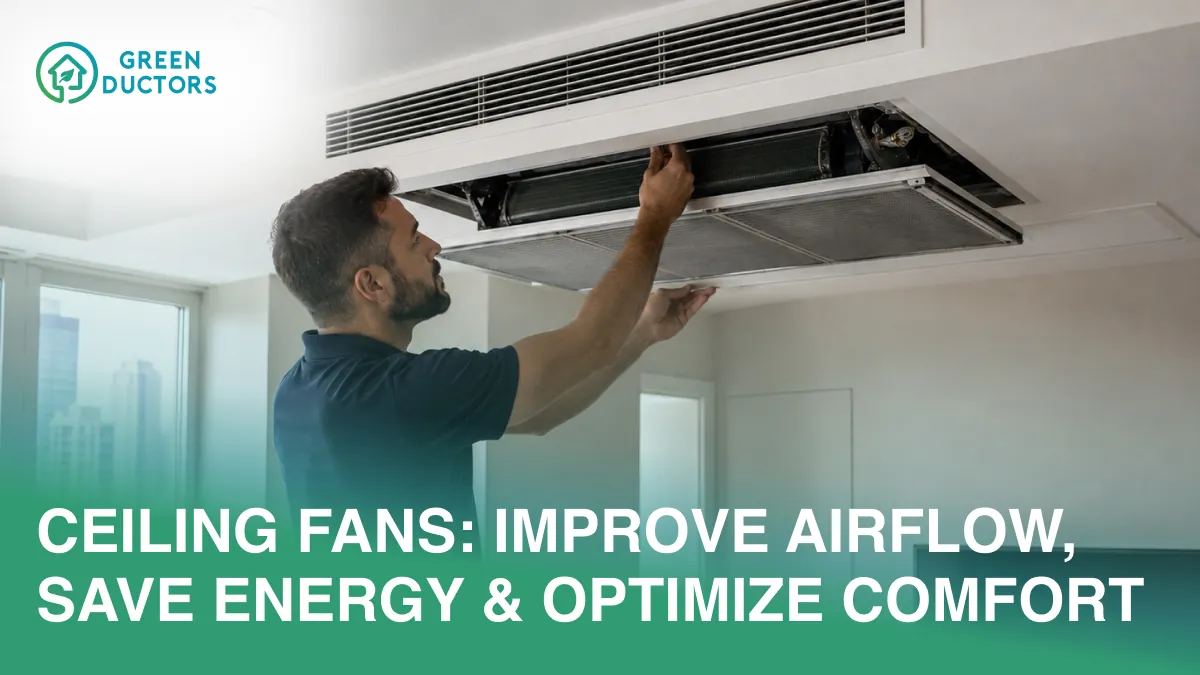
As we all know, New York is rather densely populated. With space going at a premium, compact heating and cooling solutions like fan coil units (FCUs) are gaining popularity. On paper, these units are great. They offer flexibility and lower upfront costs, and have a rather slim set up. Typically they’re comprised of a fan, a coil, and a filter section. Fewer ducts definitely make these units more attractive. However, in reality, there are quite a few major downfalls. Our team at Green Ductors feels it’s important to understand the drawbacks before installing and how you can potentially overcome them, if already installed.
The FCU Downfalls
Difficult Access
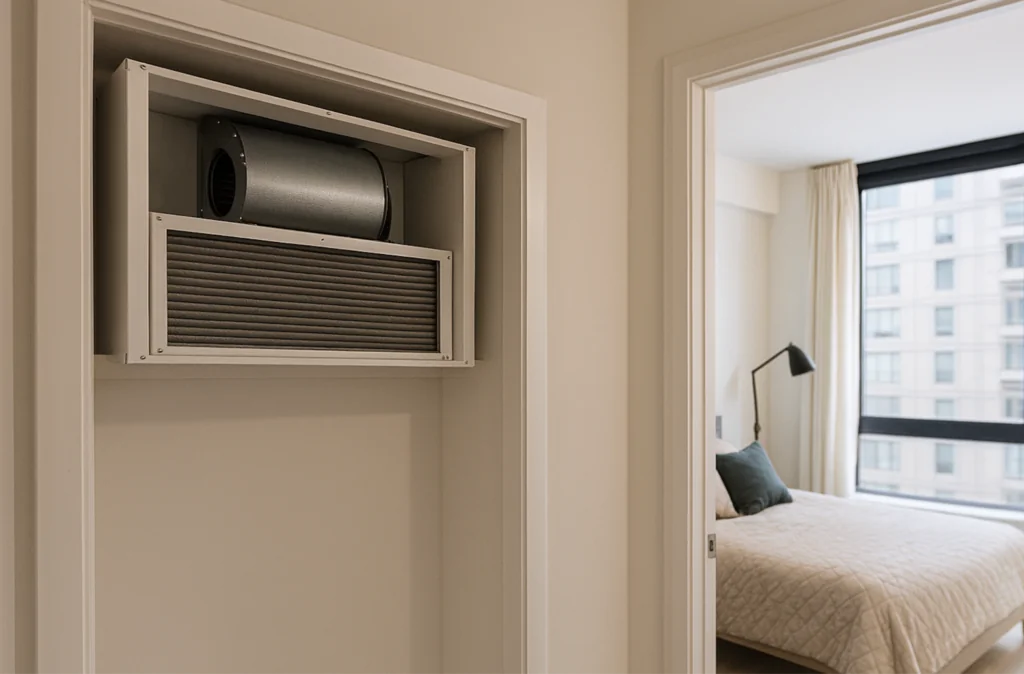
These units tend to be rather hard to access when it comes to maintenance. Fan coil units are often tucked behind walls, into drop ceilings, cramped closets, or something of the like. This makes for a severe space constraint, which greatly impacts routine maintenance. Hello backed up filters.
Filtration Issues
Due to their positioning, fan coil units tend to draw air from less than optimal locations. Think crawl spaces, or shared service shafts. Because filters are often placed at the end of the unit (or all together in a wall) typically it’s drawing in dust, lint, debris, or even moisture.
Moisture Problems
Just like with a regular system, FCUs are no different when they come to cooling and condensation. If the system is cooling, condensate is being generated, and in theory needs to safely drain off, ideally into a drain pan. In tight installations (as often the case with FCUs) the drain pan can get clogged, and moisture can build up. If so, you can expect corrosion of parts, microbial growths, and more often than not funky smells in the living space.
Mold Risk
Most fan coil units tend to use fiberglass (which is a porous material) for noise control. Due to its nature, fiberglass often acts as a sponge, and soaks up the surrounding condensation. Being that conditions are warm, dark, and damp, it’s an ideal breeding ground for mold.
Uneven Comfort
Legacy FCUs are typically noisy and have uneven temperature control. Installation typically doesn’t account for even zone cooling. Nor does the FCU set up account for a fresh air intake, and as mentioned above, air is often pulled from not so optimal places. This makes things on the temperature and air quality side of the apartment less than optimal.
What NYC Residents Can Do About FCUs
Given the downfalls mentioned above, there are a couple of things you can do should you run into a fan coil unit in your space.
Filter Relocation
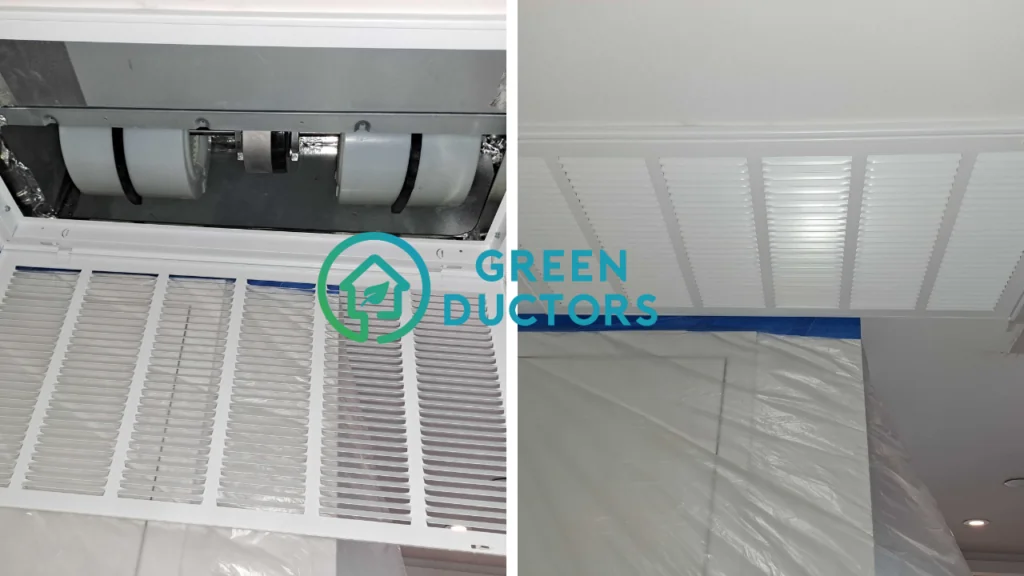
With maintenance being one of the major problems that then lead to most of the other issues, this is an important area that should be addressed. We can resolve this conundrum by relocating the filter. Typically, a return grill is also added to an apartment wall or ceiling. This makes maintenance easily accessible. Plus, we’re able to outfit the system with a better (typically MERV) filter, for greater filtration.
Encapsulate or Upgrade
If the unit is able to be properly remediated, or if you have yet to encounter a mold problem, we would advise encapsulation. You can read a bit more about remediation in one of our previous blogs, NY and NJ Mold Remediation Protocol. In short, RE500 encapsulation helps create a smooth, moisture resistant barrier where mold can’t grow.
If your unit is outdated or too far gone as is, we would recommend upgrading to a more efficient model. Newer models tend to be quieter and use high efficiency coils and fans which help with temperature control.
Routine Maintenance
As we all know, maintenance is critical. And even if you have the best design with the best layout, if you don’t take care of your system, it will make no difference. Routine inspections can help identity problems before they arise, or nip them in the bud before they’re too far gone. Ideally, fan coil units should be professionally serviced at least once a year. Filters should be addressed more frequently.
Final Thoughts
We understand the “why” behind the use of fan coil units. In theory, they make for a great space saving solution, especially in densely populated areas like New York City. For more information about indoor air quality and HVAC systems, refer to ASHRAE’s residential HVAC guidance. Nonetheless, they have a fair share of downfalls that should also be kept in mind. By shifting focus to better design and ease of maintenance, you, be it owner or property manager, are able to prevent mold and air quality issues down the line. Remember, the longer you wait, the costlier the solution may become. Don’t hesitate, and reach out to our team today at 888-334-1612 if you’ve encountered a fan coil unit in your space.
