
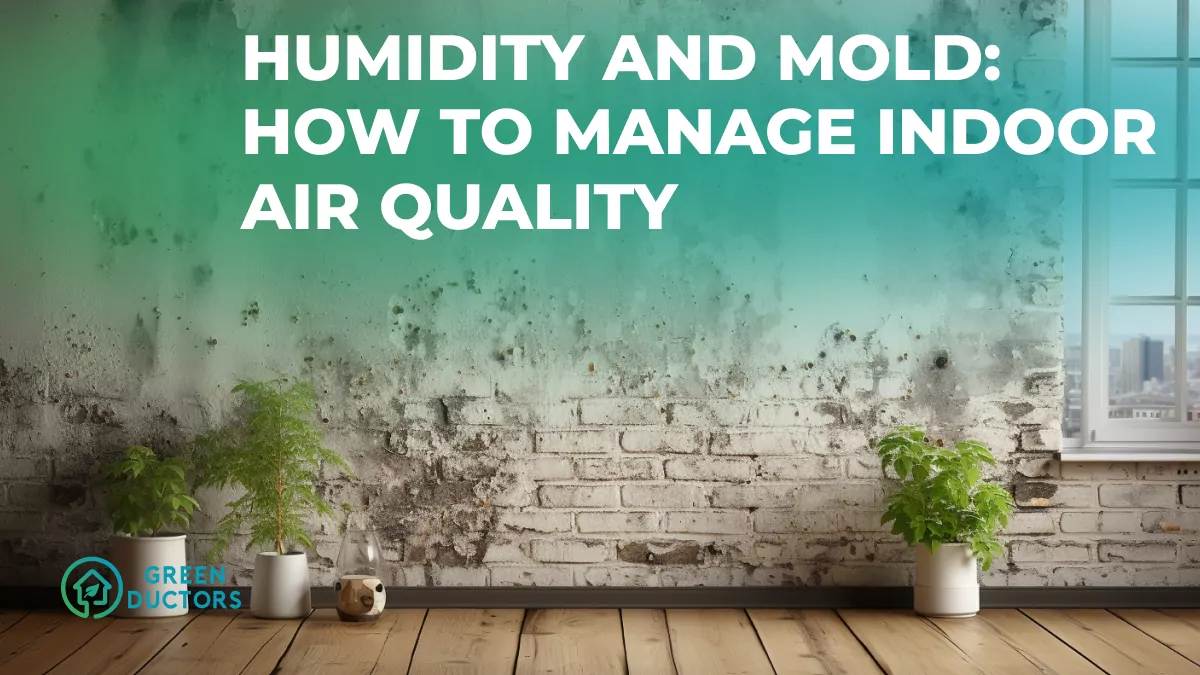
Short answer: Mold can start growing when indoor relative humidity stays above about 60% for long periods — and much faster above 70%. The EPA recommends keeping indoor humidity below 60%, ideally between 30% and 50%.
Indoor humidity levels at a glance
| Relative humidity | What it means |
|---|---|
| Below 30% | Too dry: dry skin and eyes, irritated throat, static |
| 30–50% | Ideal range for comfort and health |
| 50–60% | Dust mites thrive; keep an eye on damp rooms |
| Above 60% | Mold risk, especially on cool surfaces |
| Above 70% | Mold and bacteria can grow quickly |

Why surfaces matter more than the room reading
A hygrometer shows the humidity of the air in the middle of the room. Cool surfaces — windows, exterior walls, closets on outside walls, AC ducts and vents in summer — can be much more humid right at the surface. When warm, moist air hits them, it condenses. That is why mold often appears on window frames and vent grilles even when the room reads 55%.
Where mold grows in NYC and NJ homes
- Bathrooms without a working exhaust fan
- Basements and ground-floor apartments
- Window frames and sills in winter
- Closets and corners on exterior walls
- HVAC ducts, vents, drain pans and coils during the cooling season
How to measure humidity at home
Use an inexpensive digital hygrometer. Check several rooms — bathroom, bedroom, basement — at different times of day and in different seasons. In New York and New Jersey, summers are humid and winters with radiator heat are often very dry, so the same home can swing from one extreme to the other.
How to lower humidity and prevent mold
- Run bathroom and kitchen exhaust fans during and after showers and cooking
- Use a dehumidifier in basements and damp rooms
- Keep your AC working well — a dirty coil removes less moisture from the air
- Fix leaks and condensation problems quickly
- Avoid drying laundry indoors without ventilation
- Improve ventilation: open windows when the weather allows, or consider an ERV
- Change HVAC filters regularly
When the air is too dry
Below 30%, a different set of problems appears: dry skin and eyes, an itchy throat, and dried-out mucous membranes that make it harder for the body to fight colds and flu. A humidifier helps in winter, but keep it below 50% so you don’t trade one problem for another.
Health symptoms of high humidity and mold
Irritated eyes, headaches, stuffy nose, sneezing, chronic cough, throat irritation, difficulty breathing and trouble concentrating. People with asthma or allergies are usually affected first.
Why wiping mold away doesn’t fix it
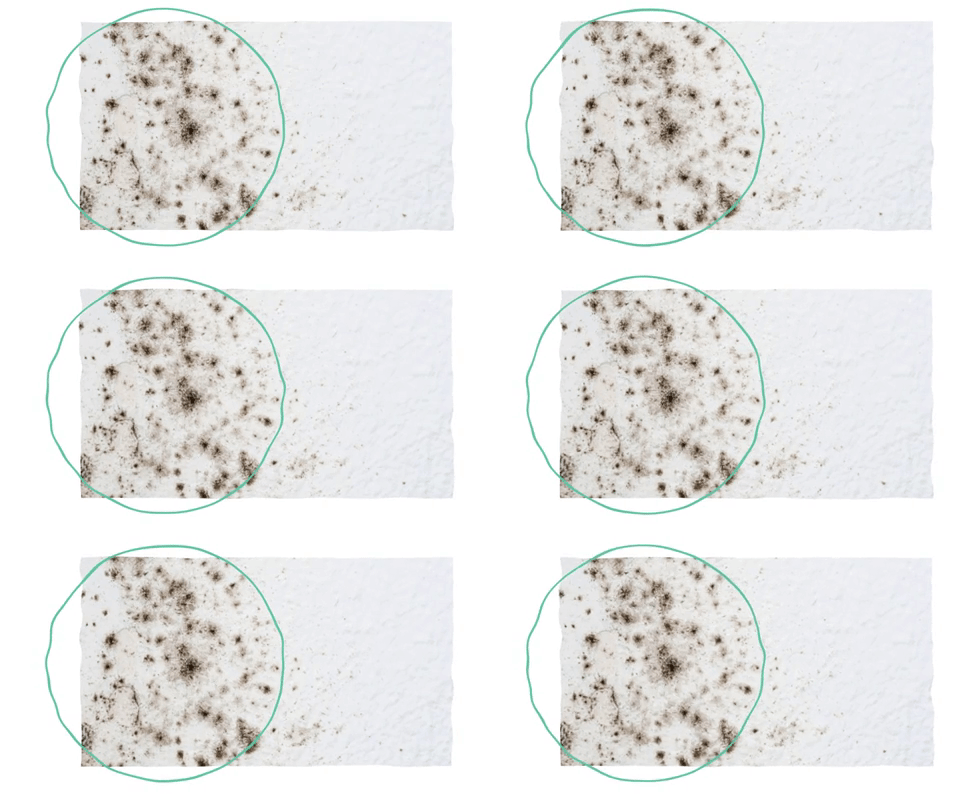
Mold that keeps coming back means the moisture source is still there. Cleaning the visible spot won’t help if humidity stays high or if mold is growing inside the ductwork and spreading spores every time the system runs. Fix the humidity first, then remove the growth at the source — including the HVAC system if vents and ducts are affected.
FAQ
Can mold grow at 50% humidity?
It’s unlikely on most surfaces, but mold can still grow on cold or wet spots — condensation on windows or a leaking pipe — even when the room average is 50%.
Will a dehumidifier stop mold?
It helps prevent new growth by keeping humidity low, but it won’t remove mold that’s already there. Existing growth needs to be cleaned.
What humidity should a basement be?
Aim for below 50–60%. Basements are naturally cooler and damper, so a dehumidifier is often needed in summer.
Spotted mold around your vents? Wiping the grille won’t reach what’s growing inside the ducts. We clean and sanitize air ducts across NYC and NJ.
