
A single wall-mounted head
Tell us the room and model, whether the filter receives regular care and what prompted the request. A photo helps show the mounting position.
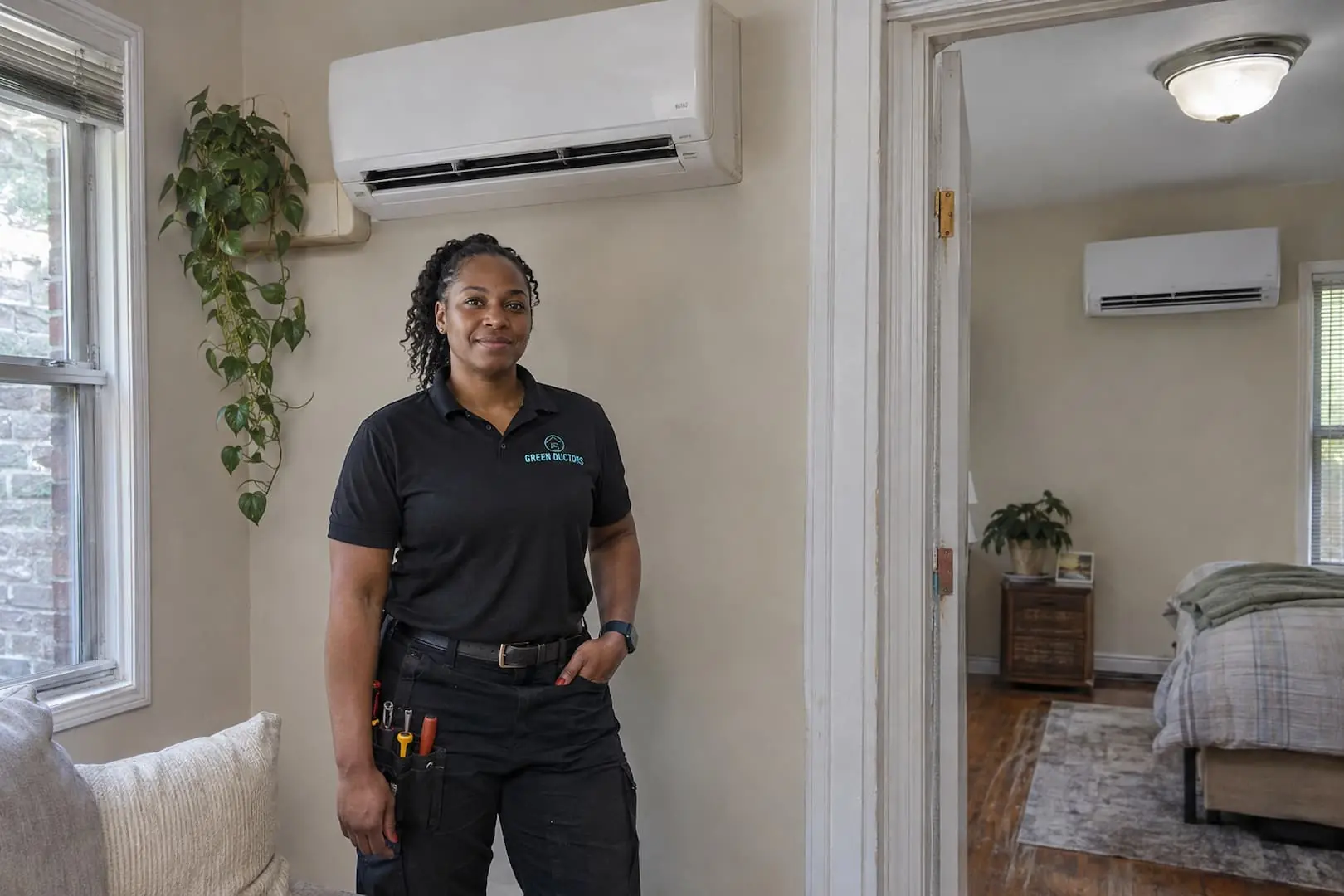
A mini-split system may serve several rooms, but each indoor head collects its own dust. Green Ductors provides mini-split cleaning in Queens, with the scope based on the units you have, their condition and the space around them.
The outdoor unit count does not tell us how many heads need cleaning. A quick room list gives us a much better starting point.
Tell us the room and model, whether the filter receives regular care and what prompted the request. A photo helps show the mounting position.
List each indoor head separately. A bedroom unit used overnight may have a different cleaning history from one in a rarely used room.
Send the unit type and access details. Ceiling cassettes and concealed indoor units can require a different setup from a wall-mounted head.
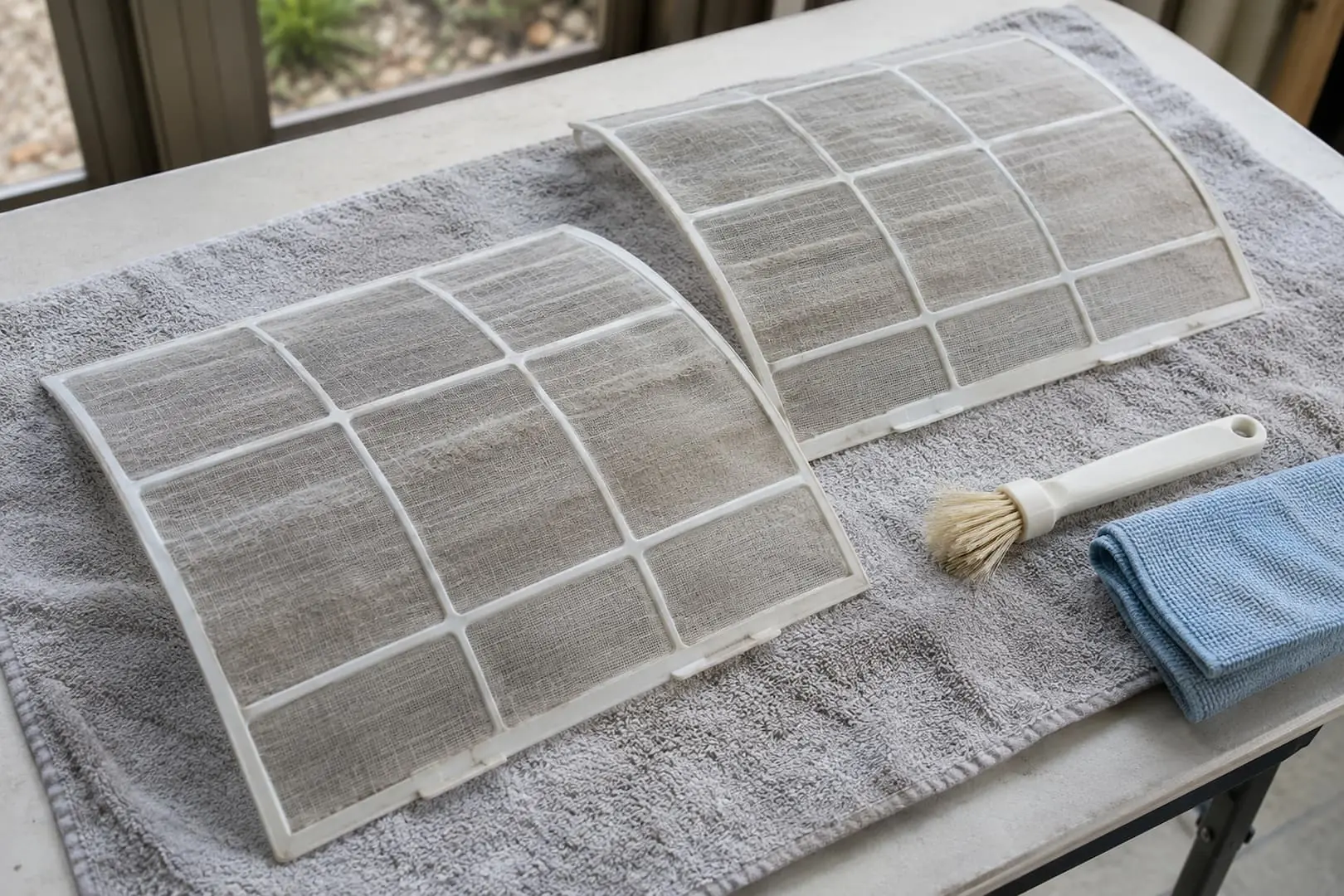
The filter catches dust before room air passes over the indoor coil. Behind it, the coil fins and blower wheel can still collect deposits. A clean filter does not show the condition of those surfaces.
During an indoor-head cleaning, we address the accessible filter, cover, coil and blower included in the scope. We also review the accessible condensate area. The unit's construction determines what can be reached without further disassembly.
For routine filter care, follow the manufacturer's instructions. Keep the filter intact and correctly fitted; avoid running the head with the filter missing while you wait for it to dry.
Mention whether it affects one head or every room. Dirt on a filter, coil or blower is one possibility, but settings and equipment faults can produce similar symptoms.
Describe when the smell occurs and how long it lasts. We can review buildup in the head and the accessible condensate area; persistent moisture or another source may need separate attention.
Report the leak when you contact us. A drain issue, pump fault or other problem may need more than surface cleaning. Keep water away from furnishings and electrical items.
Save the error code and explain what happens. An equipment fault needs diagnosis, so do not book a cleaning on the assumption that it will restore operation.
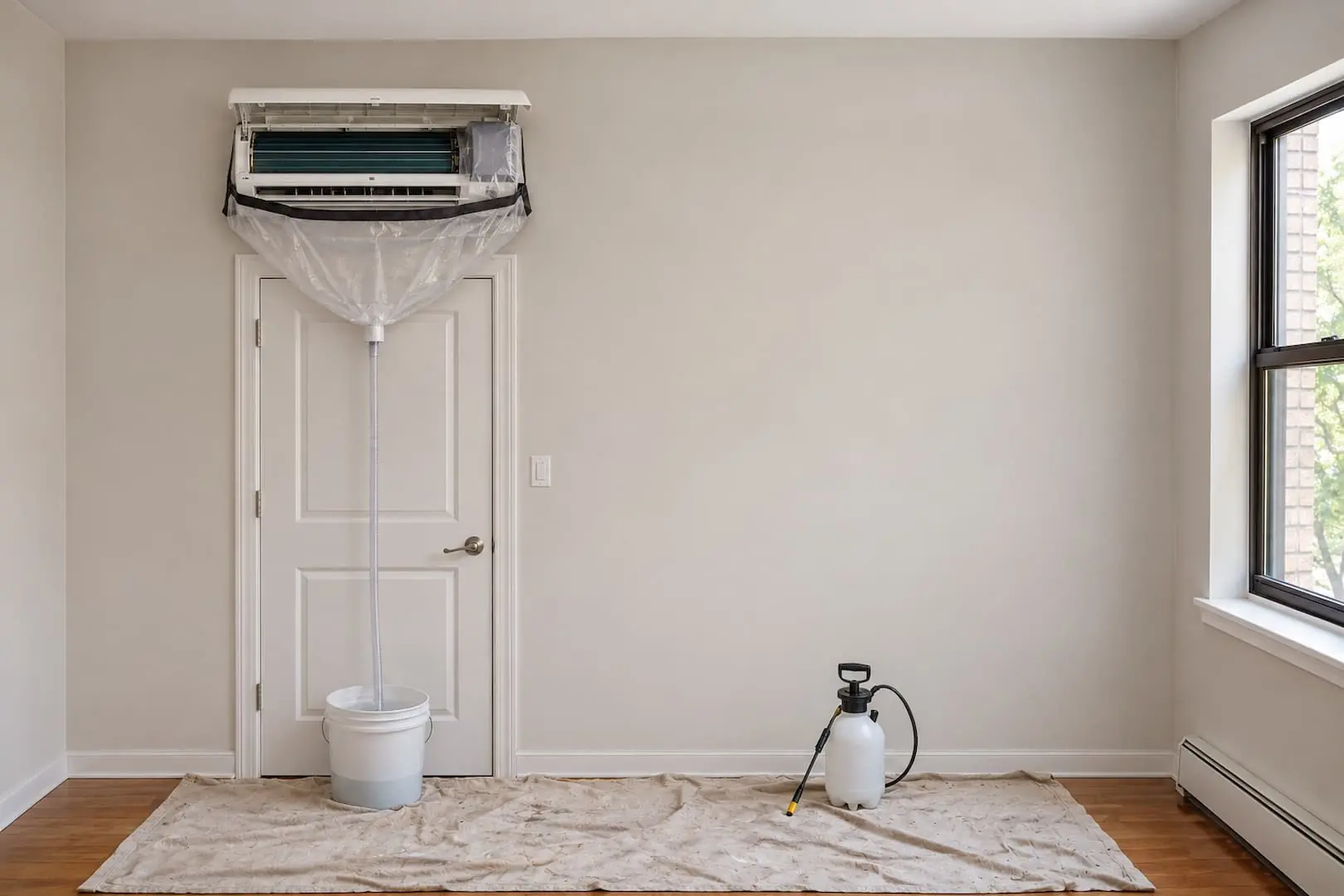
We plan protection around the head before cleaning begins. Where wet cleaning is suitable, a fitted collection bib helps contain the work and direct runoff into a container. Accessible surfaces, nearby finishes and electrical components all need consideration.
No two mounting positions are quite the same. Tell us about curtains, shelving or a desk directly beneath the head so the work area can be arranged before the technician arrives.
| Detail | Why it helps |
|---|---|
| Number of indoor heads | Each head has its own coil, fan and cleaning access. |
| Wall, ceiling or concealed unit | The design affects the preparation and disassembly needed. |
| Height and nearby furniture | A clear, stable work area is necessary for reaching the unit. |
| Last service and visible buildup | These help explain the condition and reason for cleaning. |
| Indoor-only or outdoor work too | The condenser is a separate component with its own access and cleaning needs. |
Include the address and ZIP code for your Queens property. If a building manager needs to approve access or reserve a service elevator, tell us while we arrange the work rather than on arrival.
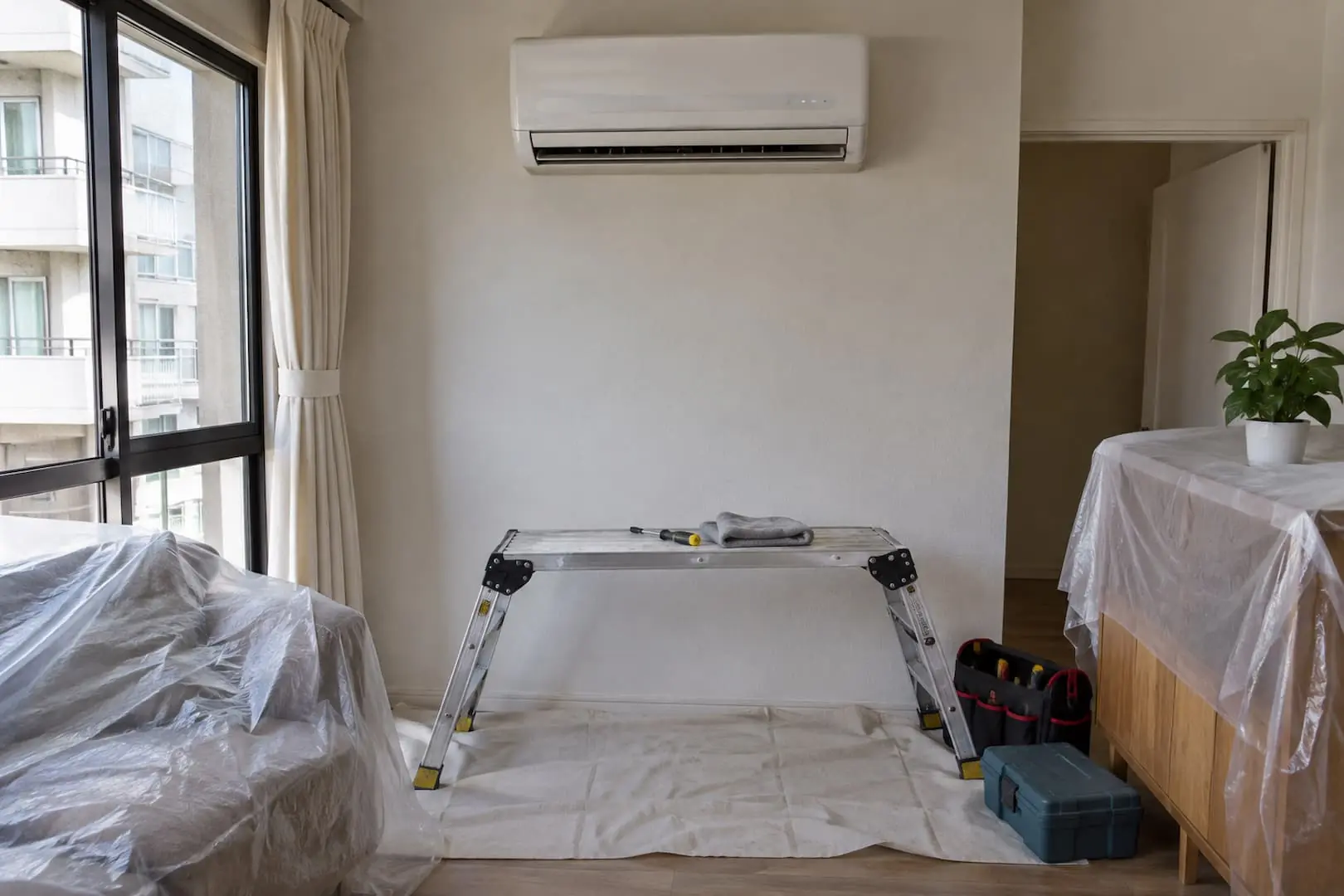
Move small belongings away from the area below the head and leave the remote nearby. Keep pets away from the working space. You do not need to remove the cover, disconnect equipment or climb up to inspect the coil.
For a home with several heads, decide which rooms are included and make sure they can all be entered during the visit. Let us know if a tenant, family member or building contact will need to provide access at a particular time.
Review the work against the heads and parts listed in the scope. Ask about any surface that could not be reached.
Covers and serviceable filters should be refitted. We check operation and discuss anything that still needs attention.
Filter care follows the unit's manual. The need for deeper cleaning depends on use, condition and the environment around each head.
If your home also has central ducts or a vented dryer, those systems have separate cleaning needs. Mention them in your request if you want to discuss more than one service.
Yes. Identify the indoor head and explain why it needs attention. We can discuss that unit's scope without assuming that every head or the outdoor condenser needs the same work.
Only if it is part of the agreed quote. Tell us where the condenser is located and whether it can be reached safely. Indoor-head cleaning and outdoor-coil cleaning involve different access.
That depends on the model, condition and agreed method. Some components can be cleaned in place; others may need more disassembly. Ask how the blower will be reached when the scope is reviewed.
No. Cleaning addresses deposits on accessible surfaces. A refrigerant leak or charge issue needs separate diagnosis and repair, even if the coil also needs cleaning.
The number of heads, design, buildup and access determine the appointment length. Request a time estimate after those details have been reviewed, especially if several rooms or occupants are involved.
Include the tenant's access arrangements and the building's requirements when booking. The person authorizing the work should confirm which units and rooms are included so the visit can proceed as planned.
Start with the number of heads and the rooms they serve. We will follow up to discuss access and the components to include.
Prefer to call?
(888) 334-1612