
A household dryer
Start with the appliance setup, known outlet location and reason for cleaning. We review the route and access needed for that dryer.
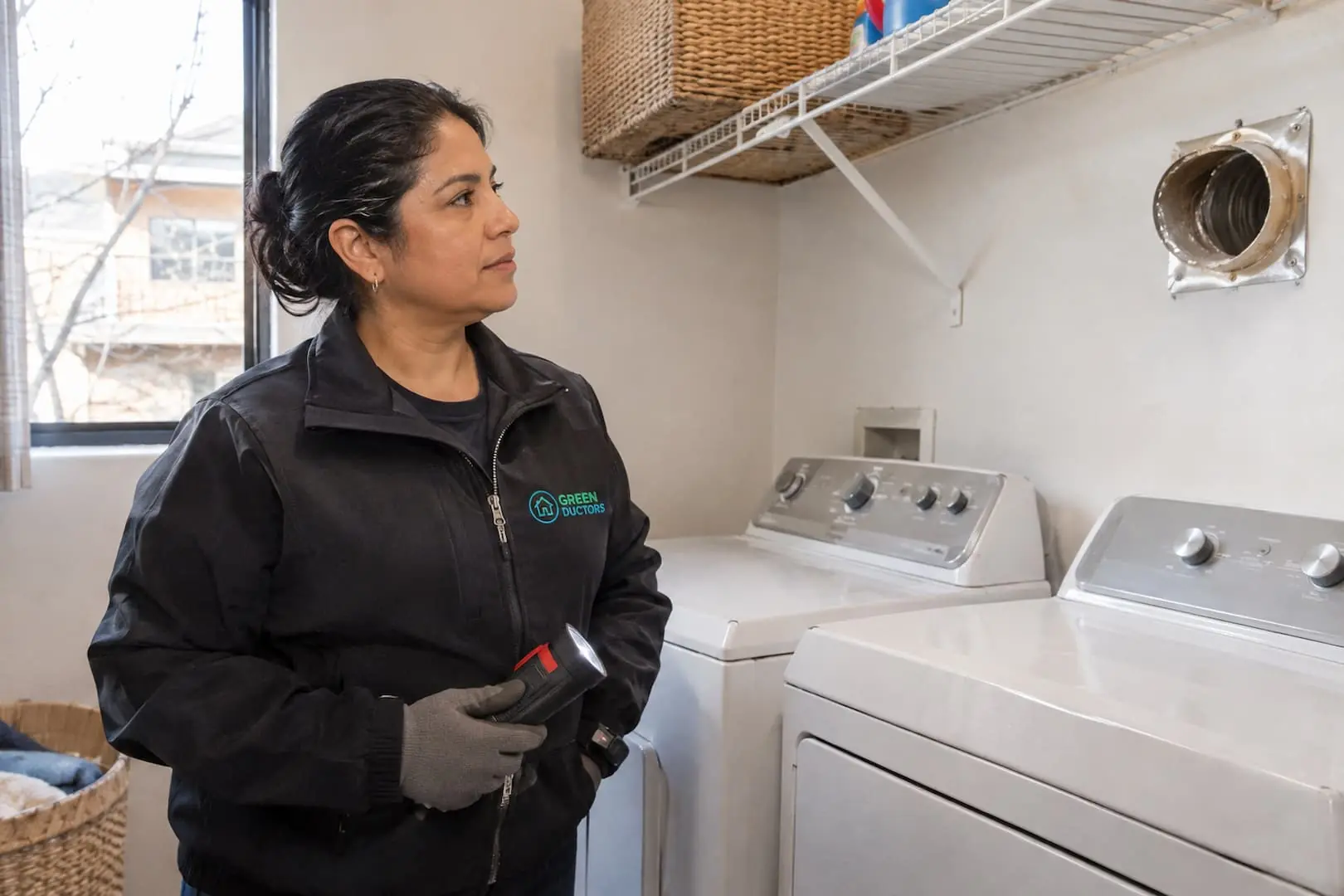
Whether you are booking for your own dryer or coordinating several apartments, the exhaust route needs to be understood first. Green Ductors provides dryer vent cleaning in the Bronx, with lint removal and access planned for the property.
Start with the appliance setup, known outlet location and reason for cleaning. We review the route and access needed for that dryer.
Mention building requirements and who can authorize access to shared spaces. A branch serving one apartment may be only part of the exhaust system.
Share the dryer count and work windows. The project needs a clear list of units, duct sections and shared equipment, with entry coordinated by a site contact.
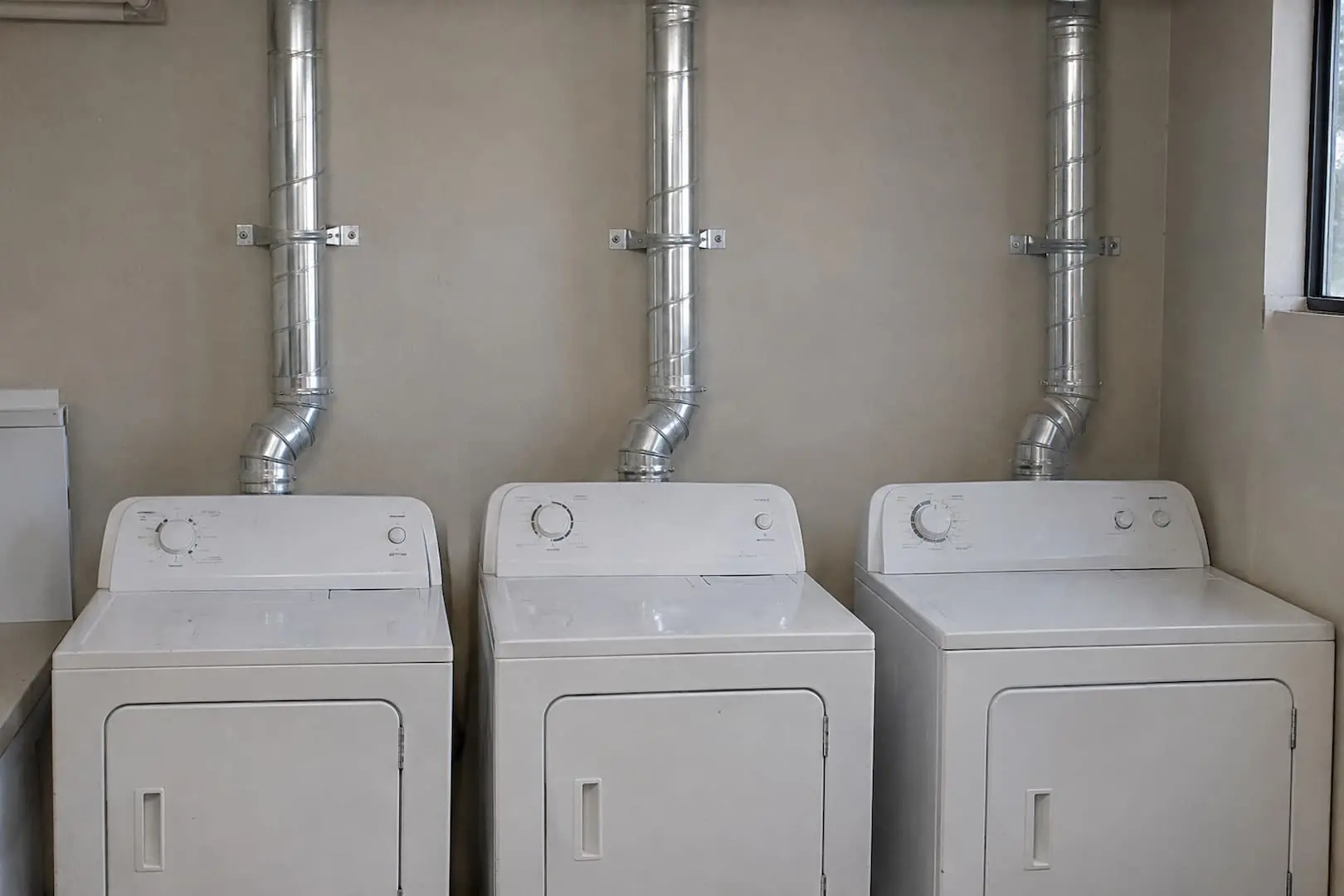
For one dryer with its own outlet, the route runs from the appliance connection to that termination. In a building with shared exhaust, the branch, shaft and any common equipment must be identified separately.
That distinction prevents a misunderstanding about what a cleaning covers. Work on an apartment branch should not be described as a cleaning of the whole building riser unless that shared section is actually included.
A duct drawing is helpful, but a missing drawing does not prevent an initial conversation. Send the known dryer locations, any previous reports and the contact who can arrange a review of the setup.
Explain whether the change affects one dryer or several. Repeated cycles can point to an exhaust restriction, although the appliance and loading also matter.
Save the message and describe what can be seen from a safe position. These observations help us review the route; they do not identify every hidden section.
Provide the previous cleaning scope and findings if available. Consistent unit and route records make future work easier to plan.
Unusual operation needs attention. Stop using a dryer with a burning or electrical smell and arrange service rather than assuming cleaning alone will solve it.
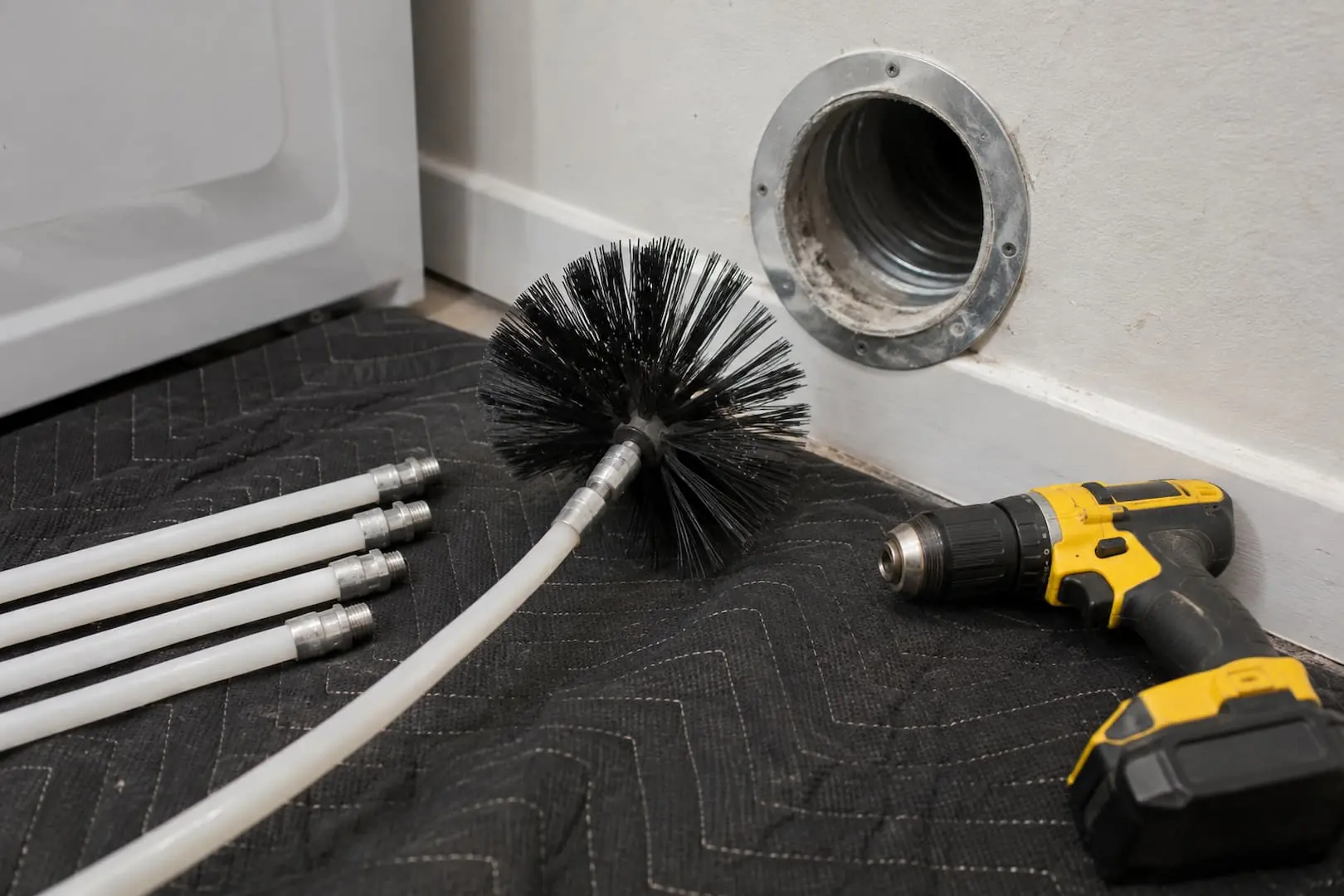
Once the accessible setup and scope are confirmed, we protect the work area and use suitable flexible cleaning tools with HEPA-filtered collection. The tools must suit the duct material and route so loosened lint can be collected.
We refit the connections removed for service and review accessible exhaust operation. Before-and-after photos record the areas documented during the job. Any unreachable section or visible defect is explained so the completed work and the remaining concerns stay clear.
Choose the person who can confirm entry, answer scope questions and arrange access to common or mechanical spaces.
Identify each apartment or laundry room included. Note stacked appliances, limited clearances and any outlet that needs special access.
Dryers being serviced cannot be used during that work. Coordinate resident entry and laundry downtime around the actual route and sequence.
Retain the completed scope, photos and any limitations. Separate follow-up items from work already completed so nothing is assumed.
| Project detail | What it changes |
|---|---|
| Dryer count and route length | The number of ducts and amount of cleaning involved. |
| Branches, bends and shared sections | How the route can be reached and which tools or access points are needed. |
| Appliance and outlet access | The setup for closets, stacked dryers, elevated outlets or locked areas. |
| Building coordination | Resident entry, work windows and any planned return visits. |
| Damage or additional equipment | Replacement connectors, repairs and shared-fan work require an agreed scope. |
The inside of the dryer cabinet is a separate service area from the exhaust duct. Appliance faults and damaged ductwork may need separate attention even when lint removal is complete. Ask the proposal to state those boundaries clearly.
Move baskets and small belongings from the working space, keep pets away and have the agreed access ready. Tell us about furniture, fixed cabinetry or heavy appliances that restrict entry to the connection.
Use your full Bronx address and ZIP code when requesting service. For a rental or managed property, confirm who authorizes the work and who will provide access. You do not need to inspect a roof outlet or open concealed spaces yourself.
Yes. Provide the number of dryers, unit access arrangements and any known shared exhaust details. We can then discuss a coordinated scope instead of treating every apartment as an identical independent route.
Start with dryer locations, outlet positions and past reports. A review may be needed to establish the route and available access before the cleaning proposal can identify all included sections.
No. Dryer exhaust carries air from the laundry appliance outdoors. Heating and cooling ducts distribute or return air for the HVAC system and need a separate cleaning scope.
That depends on the access and authorization the property requires. If the work involves common areas, shared ductwork or building-controlled entry, involve the appropriate property contact before the appointment.
The proposal should explain how missed access affects the work and whether another visit is needed. An inaccessible branch should be recorded as incomplete, rather than assumed clean because adjoining areas were serviced.
Household dryers commonly start with annual exhaust maintenance; GE Appliances recommends at least yearly inspection and cleaning. A building should adapt the schedule to dryer use, shared equipment and previous findings. Busy laundry facilities may need more frequent attention rather than the same interval as a lightly used home dryer.
No. Lint can restrict exhaust, but a damaged connection, route problem or appliance fault may also be involved. We explain visible concerns and any work outside the agreed cleaning scope.
Send your Bronx property details and dryer count. We will follow up about access, shared sections and the work you want covered.
Prefer to call?
(888) 334-1612