
The glorious HVAC. A system that can be unnoticed and under appreciated when it works as it should, but causes quick panic when it breaks. A system that helps keep us warm in the winter and cool in the summer. Heating, ventilation, and air conditioning, have you ever wondered how it came to be? History’s important, so we thought to touch on this story of necessity and innovation, as this system still plays a key role in our lifestyle today.
When Was Air Conditioning Invented?
If we want to jump all the way back to the concept of cooling, then we should have a look at the 1840s. That’s when a Florida physician by the name of Dr John Gorrie came up with the idea that by lowering indoor temperatures, you could help treat disease. With this idea, came his patented ice-making machine in the 1850s, which ultimately laid the groundwork for mechanical refrigeration.
If we skip a few decades later, to the 1900s, that’s when the foundation for the modern HVAC was laid. Mind you this happened in our very own Brooklyn. This raises the question of “Who invented the air conditioner?” Well, it was an engineer by the name of Willis Carrier, who had a humidity problem to solve. The Sackett-Wilhelms Lithographing and Publishing Company had a paper warping problem, all because of inconsistent moisture levels. Carrier’s solution was to blow air over chilled coils to help control both temperature and humidity.
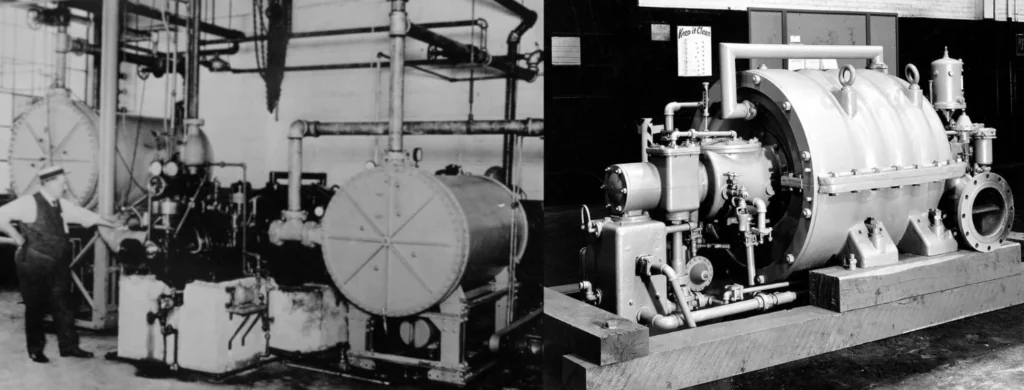
This idea revolutionized indoor climate control. His idea was quickly applied to other places (like department stores and movie theaters), where it helped draw people in and ultimately became part of the experience.
Heating and Ventilation
It’s only fair to touch on the other letters of HVAC as well, they’re just as important.
When it comes to heating systems, well they date back to the 1800s. The early versions used boilers to make steam that went through radiators to make heat. The cool part being, some of these contraptions can still be seen throughout NYC today, especially in historic brownstones, or the like. If you think about it, the concept of AC was just unraveling in the early 1900s, but heating had the upper hand, and by the same time, forced air heating systems came about. They’re what’s similar to our day and age. Ducts and fans were used to move air throughout buildings. Sounds an awful lot like the modern day system, right?
Ventilation on the other hand has probably been practiced since time began. Think opening doors, windows, or even chimneys. It’s ultimately the movement of air. But as civilization evolved, so did the need for better ventilation, especially when buildings started to become more insulated. Hence in the mid 1900s, engineers began incorporating dedicated ventilation systems as well, especially in places like New York, where pollutants (like dust, smog, and so forth) posed serious concerns.
The HVAC Enters the Home
In the early 1900s, big companies like Frigidaire and General Electric started coming out with inventions like the split-system or self contained room coolers. With that, the first air conditioner was installed in a Minneapolis mansion in 1914. That being said, these units weren’t feasible for the average person. So when did air conditioning become common? We would say around 1947, when Henry Galson made a compact and affordable window unit option.
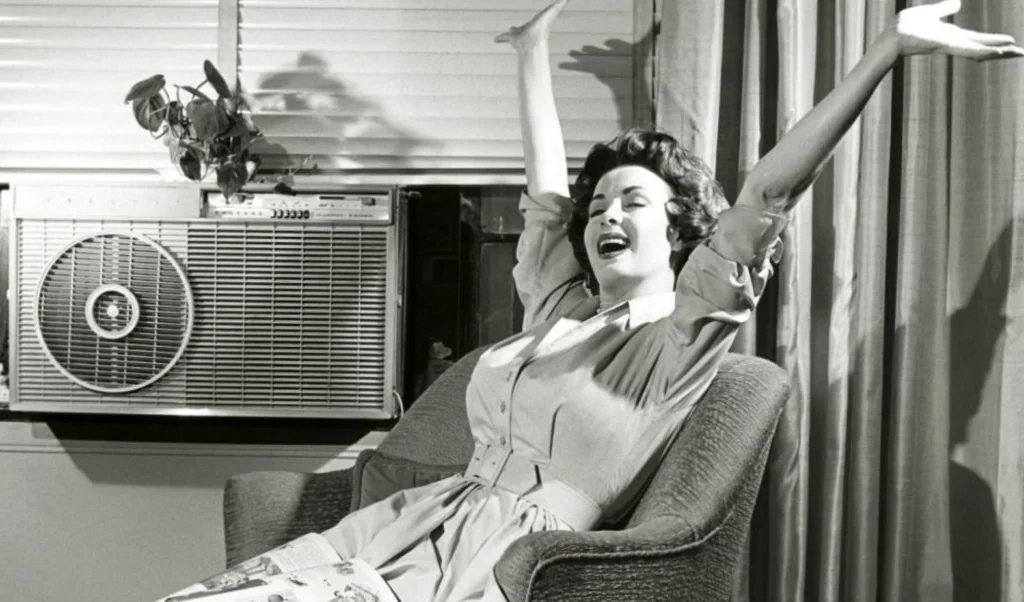
When the 60s and 70s came around, residential and commercial systems began integrating all three functions of heating, cooling, and ventilation. Subsequently, new buildings started to design HVAC systems into the plan. Ultimately, HVACs became crucial for multi floor climate control, in addition to helping with indoor air quality and the reduction of utility costs.
Moving Forward
As the 1970s came around, so did environmental concern. Changes to HVAC technology had to be made due to the refrigerants used. Although the old CFC refrigerant was praised for its safety, it was linked to ozone depletion. Hence the Clean Air Act of 1990 initiated a phase out of this refrigerant and led a shift to HFC. Also in the 1990s, the US Department of Energy set the first efficiency standard. This ultimately saved a whole lot in energy costs and carbon emissions.
We couldn’t ignore the fact that the National Air Duct Cleaners Association (otherwise known as NADCA) also came about around that time (in 1989 to be exact) due to the increased concerns about indoor air quality. They helped standardize practices related to the HVAC, such as inspection, cleaning, and restoration. NADCA works to make sure technicians are properly trained to deliver safe and effective results. Green Ductors is NADCA certified, so you can rest assured that we follow rigorous standards so you have the best indoor air possible.
Regulations pushed innovation. As the 2000s hit, things like smart thermostats and ductless mini splits came about. Variable spread compressors improved efficiency. Geothermal heat pumps provided eco-friendly cooling and heating.
New York and New Jersey have always been at the forefront of HVAC evolution (I mean we take credit for the first air conditioner after all). In part, thanks to our high population and swinging temperatures. Even today, innovation remains in play. Regulations like NYC’s Local Law 97 continue to push for the adoption of cleaner and greener solutions.
To Sum Up
It’s important to understand your history, at minimum to understand and appreciate how far technology has come. By understanding history, you can become better at recognizing different systems. For example, maybe you have a legacy system (think steam radiators) and maybe it’s in need of modernization. If you’re in the New York or New Jersey area, you know that these regions are melting pots, and that includes melting pots of architecture and innovation. It’s ultimately from a Brooklyn printing press that we now have the modern HVAC system that we’ve all come to know and love.
Today, we hope you gained some new knowledge and we were able to answer your question on ‘when was the air conditioner invented’. With that, we want to remind you that your friends at Green Ductors specialize in modern solutions. Whether you need your system cleaned, repaired, maintained, or inspected for mold, we’re your guys. We can also perform indoor air quality testing, or flat out install new systems. If you’re looking to improve the cleanliness or your current HVAC set up as a whole, we can help. Don’t hesitate to reach out for a consultation, or to schedule an appointment at 888-334-1612
