
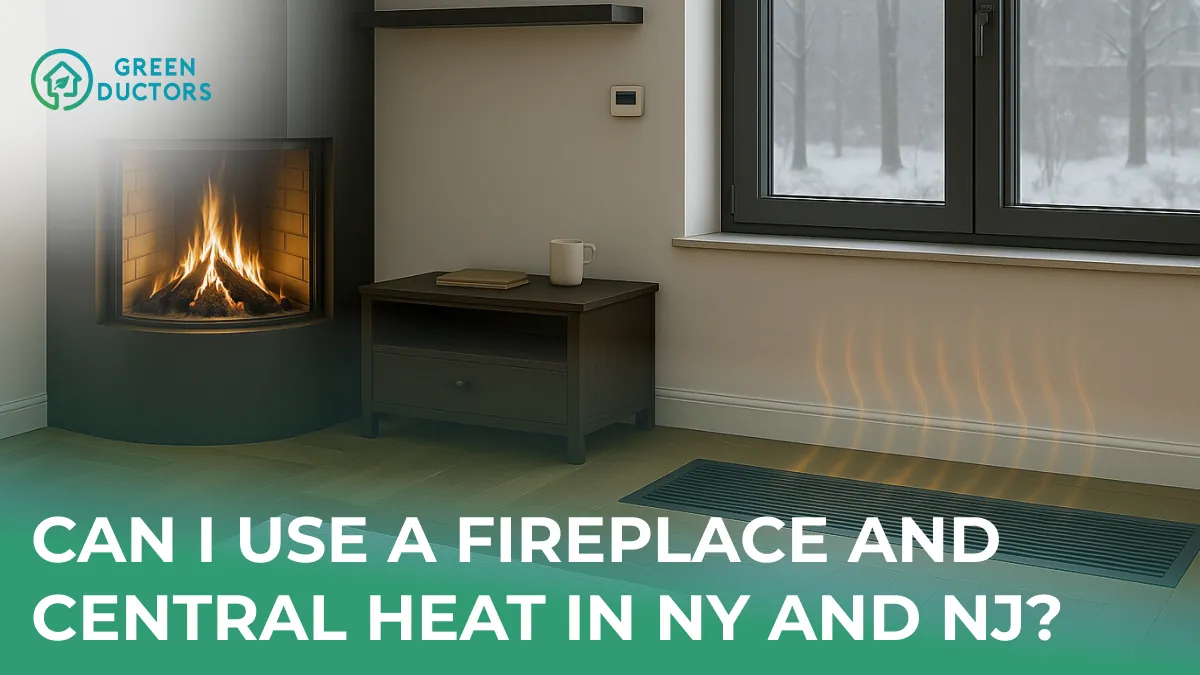
The cold temperatures outside are making us all want to cozy up inside. Let’s be honest, there probably aren’t many things cozier than a crackling fireplace by your feet, at least in our opinion that is. With a furnace fireplace (or any fireplace really), often comes the question of whether or not it can be used with central heat. In short, yes, but as always there are pros and cons to everything. Plus, knowing a few tips for best usage may come in handy.
Keep in mind that a fireplace gives localized warmth. So on an extra cold day, it will probably be hard to go about not using central heat (unless you happen to have a fireplace in every room). Central heat allows you to evenly distribute warm air due to its use of the duct system.
The Flip Side to the Fireplace Coin
Of course, where would we be without some pros and cons.
When it comes to the upside of things, you get added warmth from a fireplace. Plus, energy savings should you crank your thermostat down a few degrees. It’s pretty clear, but “the hearth of the home” will add a fair amount of heat to the room you’re using it in. You may wonder how to circulate heat from a fireplace. Well, you can open doors and vents to facilitate airflow, and even consider a fan for warm air distribution. Because of this extra layer of heat, you can in theory lower your central heat by a few degrees. The heat generated by the fireplace should counteract. Since you’re putting less strain on the central heat, it can yield you some savings and a few extra bucks in your pocket.
Downsides on the other hand can include things like heat loss, inefficiency, and air quality concerns. Remember, if you don’t take good care of things, they probably won’t work as they should. For example, if your chimney is dirty, you could be reintroducing smoke and allergens back into your home since they can’t properly escape. If you don’t have proper airflow management, it can also waste energy instead. Also, keep in mind that an open damper or a poorly sealed fireplace can pull the warm air from your central system. It’s best to keep an eye on things to avoid heat loss in the coldest parts of the year.
Keeping it Smart in NY and NJ
It may not be necessary, but we’re going to say it anyway, this way you aren’t left wondering “do fireplaces heat homes”. There are a few things that should be done when it comes to using central heat and a fireplace together. For one, after you’ve used your fireplace, close the damper. This way, the warm air that your central system worked on producing, stays inside the home and doesn’t escape through your chimney. Speaking of chimneys, be sure it’s clean and up to par before using. It’s important for your chimney to have proper ventilation to prevent backdrafts into the home.
As a recommendation, lower your thermostat a few degrees when the fireplace is working, but don’t turn the system off altogether. Remember, your fireplace mostly heats the area it’s in, so it’s important for the temperature in the rest of the home to be maintained. Central heat helps do just that, and allows for a balanced temperature throughout your space.
Our Last Two Cents
Fireplaces can add lots of coziness to a space and can also help offset winter heating costs if used correctly. If your home isn’t already outfitted with a fireplace, you can always look into adding something like portable fireplace gas heaters for the home in order to get that cozy factor.
So can you use both a fireplace and central heat at the same time? Sure you can. Just keep in mind the damper position, energy usage, and airflow. Remember that the team at Green Ductors is NADCA certified and we offer a 6m warranty on our service. So don’t hesitate to reach out today for an array of air quality needs. Have questions if we do a service? Call our team at 888-334-1612 to find out!
